



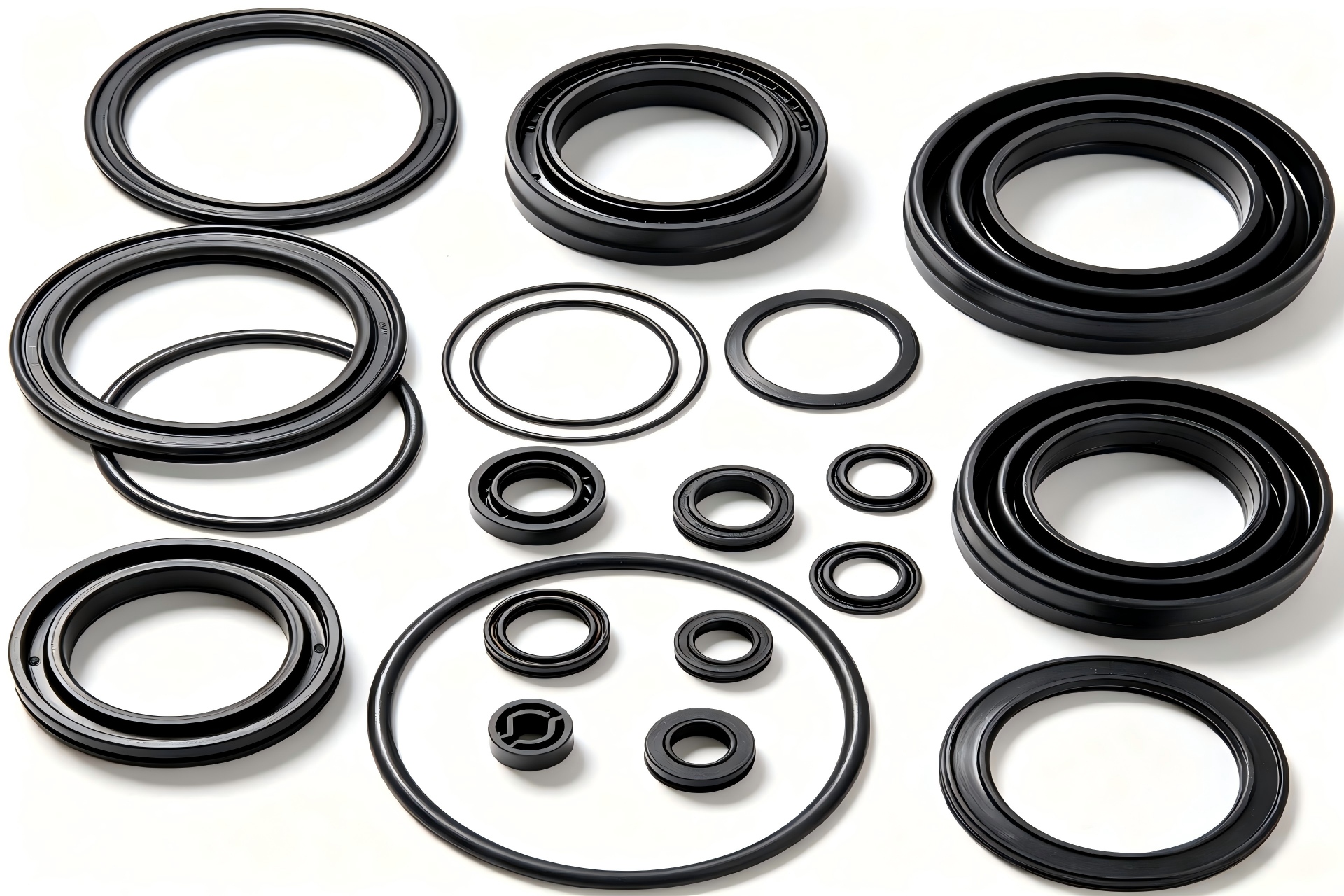
Chloroether rubber (ECO), formally known as epichlorohydrin homopolymer or copolymer, is a specialised synthetic rubber produced by the polymerisation of epichlorohydrin alone (homopolymer type) or in copolymerisation with ethylene oxide (copolymer type). It possesses extremely low gas permeability and excellent resistance to leaded/sulphur-containing fuels and refrigerants, offering unique overall performance characteristics.
ECO offers exceptional resistance to leaded, sulphur-containing and alcohol-containing fuels, as well as chlorine-containing refrigerants (such as Freon R12 and R22), a level of performance that many general-purpose rubbers struggle to match. At the same time, it demonstrates excellent resistance to mineral oils, hydraulic oils, gear oils, greases and ozone. However, it is not resistant to esters, ketones, aromatic solvents, strong acids and brake fluids (DOT grades).
The most notable advantage of chlorinated polyether rubber is its extremely low gas permeability; its gas-tightness is comparable to that of butyl rubber (IIR) and far superior to that of nitrile rubber (NBR). Copolymer ECO (ECO-EO) also possesses excellent low-temperature performance, with a brittle temperature of down to -45°C, whereas homopolymer ECO is limited to -25°C.
The operating temperature range for ECO is -45°C to +135°C, with short-term resistance up to +150°C. Its resistance to heat ageing is superior to that of NBR, but inferior to that of fluorocarbon rubber. Copolymer ECO, due to the presence of ethylene oxide units in its molecular chain, offers good low-temperature flexibility and dynamic performance.
Chloroether rubber possesses outstanding resistance to ozone and weathering, and is not prone to cracking during long-term outdoor use. It has moderate mechanical strength (tensile strength 10–15 MPa) and low compression set, performing particularly well at high temperatures. Furthermore, whilst ECO’s abrasion resistance is average, it possesses unique anti-static or low-resistance properties (when appropriately formulated), making it suitable for sealing applications requiring electrical conductivity or anti-static properties.The disadvantages of ECO rubber include its corrosive effect on moulds (the vulcanisation process may release hydrogen chloride gas), the need for sophisticated processing techniques, and its lack of resistance to hot water and steam. Its cost is higher than that of NBR, but lower than that of fluorocarbon rubber and silicone rubber.
ECO seals, i.e. seals manufactured from chloroether rubber, play an irreplaceable role in automotive fuel systems, air conditioning and refrigeration systems, environmental protection equipment, and specialised sealing applications requiring high gas tightness, owing to their extremely low gas permeability and excellent resistance to leaded/sulphur-containing fuels and Freon refrigerants.
Automotive fuel systems: In fuel pump seals, fuel filter gaskets, injector O-rings, quick-connect fuel line seals and fuel tank level sensor seals, ECO seals can withstand long-term exposure to petrol or diesel containing sulphur, lead or alcohols (such as methanol and ethanol), whilst preventing fuel vapour permeation and leakage, thereby meeting stringent evaporative emission standards.
Automotive air conditioning and refrigeration systems: In air conditioning compressor shaft seals, pipe joint O-rings, expansion valve seals, and refrigerant (R12, R22, R134a; note compatibility with new environmentally friendly refrigerants), ECO materials offer excellent resistance to Freon and refrigeration oils, whilst their low permeability reduces long-term micro-leakage of refrigerant, thereby improving system efficiency.
Environmental Protection and Exhaust After-treatment Systems: In exhaust gas recirculation (EGR) valve shaft seals, diesel particulate filter (DPF) differential pressure sensor line seals, and evaporative emission control system (EVAP) O-rings, ECO withstands the harsh environment of acidic combustion products, ozone and high-temperature exhaust condensates, whilst maintaining long-term elasticity.
Industrial Gas and Gas Transmission: In valve seals for natural gas regulating stations, gaskets for liquefied petroleum gas (LPG) cylinder valves, internal sealing diaphragms for gas meters, gas line seals for chromatographs, and piston rings for hydrogen compressors, ECO’s extremely low permeability and resistance to non-polar gases ensure the safe containment of high-risk media.
Automotive Sensors and Electrical Components: In engine oil pressure sensor seals, crankshaft position sensor seals, oxygen sensor harness sheaths and anti-lock braking system (ABS) seals, ECO’s oil and ozone resistance, along with its anti-static properties achievable through formulation, help protect precision electronic components.
Specialised hydraulic and pneumatic systems: In pneumatic valve seals requiring high airtightness, low-temperature hydraulic system seals (copolymer ECO), and seals exposed to hydraulic media containing hydrogen sulphide (such as in oilfield equipment), ECO offers superior chemical resistance and lower gas permeability than NBR.
It is important to note that ECO seals must not be used in contact with water, water vapour, strong acids or alkalis, ketone solvents (such as acetone), ester solvents (such as ethyl acetate) or brake fluids (DOT 3/4). For these media, please select EPDM, FKM or silicone rubber.
Furthermore, due to the corrosive nature of ECO on moulds, it is essential to verify that the supplier possesses professional experience in processing ECO; copolymer ECO (ECO-EO) is more highly recommended for applications requiring low-temperature performance, whilst homopolymer ECO is better suited to scenarios requiring higher oil temperature resistance or a lower-cost solution.In summary, Due to their extremely low gas permeability, excellent resistance to leaded/sulphur-containing fuels and Freon, good resistance to ozone ageing, and unique anti-static properties, chlorinated polyether elastomers and their ECO seals play a key role in automotive fuel and air conditioning systems, refrigeration equipment, environmental emission control, and high-seal-integrity industrial applications. They are high-performance speciality sealing materials designed specifically for demanding fuel and refrigerant media.
Comments are closed