



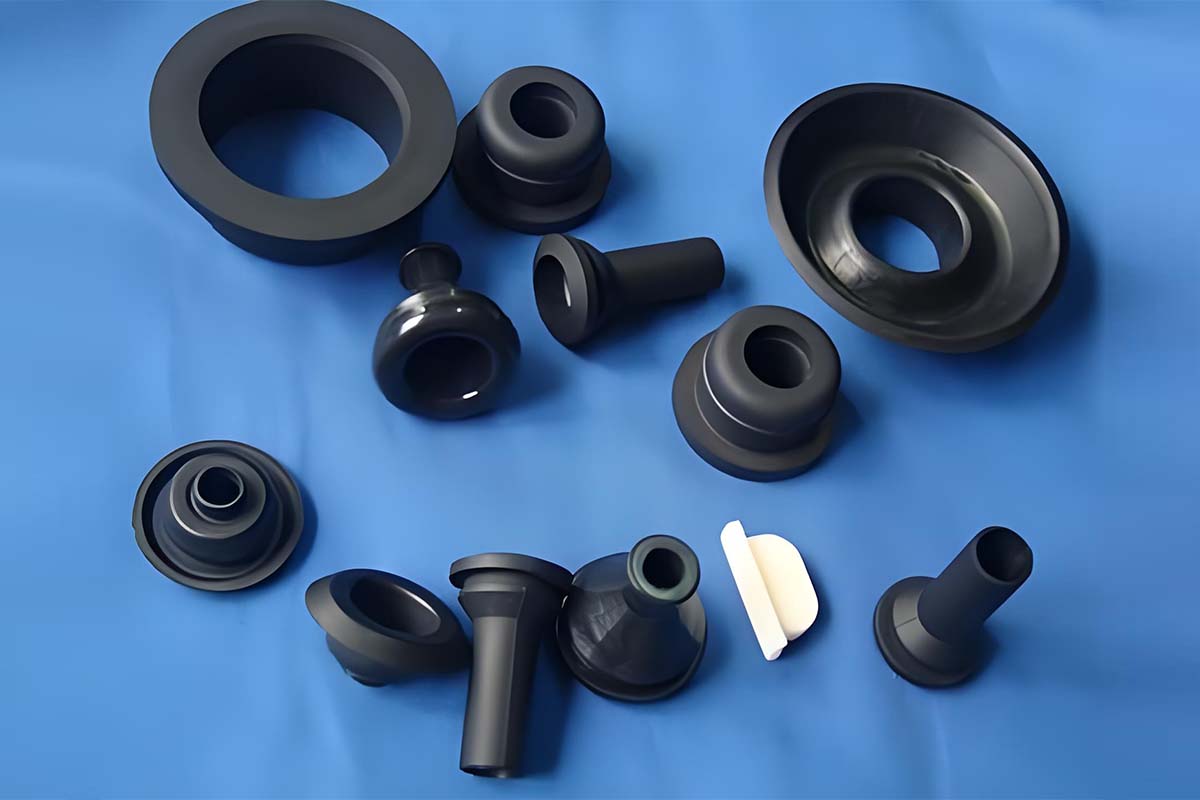
Ethylene-acrylate rubber (AEM), whose full name is ethylene-methyl acrylate copolymer, is a special type of synthetic rubber produced by the free-radical polymerisation of ethylene and methyl acrylate under high temperature and pressure. commonly marketed under the brand name Vamac®. It offers excellent resistance to high temperatures and oils, as well as outstanding low-temperature performance, with overall properties falling between those of acrylate rubber (ACM) and fluorocarbon rubber (FKM).
AEM demonstrates exceptional resistance to high-temperature lubricating oils, automatic transmission fluid (ATF), gear oils and additive-containing engine oils, exhibiting minimal volume change and high retention of mechanical properties in oil baths at temperatures of 150–170°C. Its oil resistance is significantly superior to that of ACM and nitrile rubber (NBR), but inferior to that of fluorocarbon rubber (FKM). It exhibits poor resistance to fuel, non-polar solvents, aromatic hydrocarbons and brake fluids (DOT grades).
The most notable advantage of ethylene-acrylate rubber is its excellent low-temperature performance; its brittle temperature can reach -40°C, with special grades capable of withstanding temperatures as low as -55°C, far surpassing ACM (typically -20°C). At the same time, its upper operating temperature limit is 175°C, with short-term resistance up to 200°C, thereby maintaining good elasticity across a wide temperature range (-40°C to 175°C) – a characteristic that many traditional oil-resistant rubbers struggle to achieve.
AEM exhibits excellent resistance to thermal-oxidative ageing and ozone ageing, and is unlikely to harden or crack during prolonged exposure to hot air. It has moderate tensile strength (12–18 MPa) and low compression set, particularly at high temperatures, making it highly suitable for both static and dynamic sealing applications. Furthermore, AEM has average abrasion resistance and is not resistant to water, water vapour, or acidic and alkaline media.AEM rubber has moderate mechanical strength but offers excellent tear resistance and dynamic fatigue life. It possesses good electrical insulation properties and a high volume resistivity. However, AEM is sensitive to processing conditions and requires a specialised vulcanisation system (primarily peroxide vulcanisation); its cost is significantly higher than that of ACM and NBR, but lower than that of FKM and silicone rubber.
AEM seals, i.e. sealing rings made from ethylene-acrylate rubber, serve as high-end alternatives in automotive powertrains, turbocharger piping, medium- and low-temperature industrial oil seals, and sealing applications with stringent requirements for high- and low-temperature cycling, owing to their exceptional wide-temperature-range oil resistance and excellent low compression set.
Automotive powertrains and transmission systems: In the hydraulic control modules of automatic transmissions (AT) and dual-clutch transmissions (DCT), as well as in the piston seals of shift actuators, oil pump seals, crankshaft and camshaft position sensor seals, and engine timing cover gaskets, AEM seals can withstand the high temperatures of ATF oil up to 150°C over the long term, whilst maintaining sealing flexibility at low temperatures down to -40°C, ensuring reliable operation in all seasons and across all regions.
Turbochargers and intake/exhaust systems: In turbocharger oil return line seals, intake manifold connection seals, intercooler chamber seals and exhaust gas recirculation (EGR) valve shaft seals, AEM can withstand high-temperature oil-air mixtures of 150–175°C and exhibits excellent resistance to ageing caused by oil mist and hot air, making it a cost-effective alternative to ACM and certain fluorocarbon rubbers.
Industrial hydraulics and gear drives: In piston seals for hydraulic cylinders in construction machinery (support ring fit), industrial gearbox input shaft oil seals, injection moulding machine hydraulic valve block seals, and wind turbine gearbox lubrication system seals, AEM seals demonstrate excellent compatibility with anti-wear hydraulic oils and gear oils containing extreme pressure additives such as zinc, sulphur and phosphorus. Furthermore, their low compression set characteristics reduce the risk of leakage following prolonged periods of inactivity.
Automotive engine peripherals: In valve cover gaskets, oil cooler seals, oil pan gaskets and engine front cover seals, AEM’s high-temperature ageing resistance ensures it does not harden over time in engine compartments at around 150°C. Furthermore, its tolerance to engine oil is superior to that of ACM, resulting in a lower risk of oil leakage.
Low-temperature or wide-temperature-range applications: In outdoor hydraulic equipment in cold regions, temperature control valve seals in air-cooled systems, lubricant line seals in refrigeration equipment, and seals in aerospace auxiliary power units (non-fuel systems), AEM’s exceptional low-temperature properties make it the ideal choice where ACM (too brittle) and FKM (poor low-temperature performance) cannot be used.
Electric vehicle thermal management systems: In sealing applications for electric vehicle battery coolant lines, drive motor oil cooling systems, and electronic control unit (ECU) heat dissipation channels, AEM exhibits excellent resistance to ethylene glycol-based coolants and new-generation insulating oils (superior to ACM) and can meet thermal cycling requirements from -40°C to 150°C, making it increasingly popular.
It is important to note that AEM seals must not be used in contact with fuel (petrol/diesel), brake fluid (DOT 3/4), water, water vapour, strong acids or alkalis, or chlorinated solvents. For these media, please select FKM, EPDM or hydrogenated nitrile rubber (HNBR).
In summary, ethylene-acrylate rubber materials and their AEM seals play an increasingly important role in automotive automatic transmissions, engine peripherals, industrial hydraulic systems and electric vehicle thermal management applications. This is due to their excellent high-temperature oil resistance and low-temperature elasticity across a wide temperature range, as well as their exceptional low compression set and good resistance to thermal-oxidative ageing. They represent a high-performance, cost-effective, wide-temperature-range sealing material that serves as a suitable alternative to ACM and certain FKM compounds.
Comments are closed