


FFKM Chemical Compatibility Guide: Acids, Solvents, Amines and Steam
FFKM seals are widely selected for processes involving aggressive chemicals, high temperatures and mixed fluid streams. Compared with conventional elastomers, perfluoroelastomer compounds generally provide broader resistance to acids, solvents, amines, oxidizing chemicals and high-temperature process media.
However, the term FFKM describes a material family—not one universal compound.
Different FFKM formulations use different polymer systems, fillers, curing technologies and hardness levels. A compound designed for dry service at extreme temperatures may not be the best choice for hot steam or concentrated amines. Similarly, a general-purpose chemical-processing grade may not provide the cleanliness, plasma resistance or low-temperature flexibility required in another application.
The most important rule is:
Do not select an FFKM seal only because a compatibility chart lists “FFKM” as resistant. Select a specific compound using the actual chemical, concentration, temperature, pressure and exposure cycle.
This guide explains how FFKM seals generally perform in four demanding media groups:
- Acids
- Solvents
- Amines
- Hot water and steam
It also explains which application details must be reviewed before approving an FFKM O-ring, gasket or custom molded seal.
What Is FFKM?
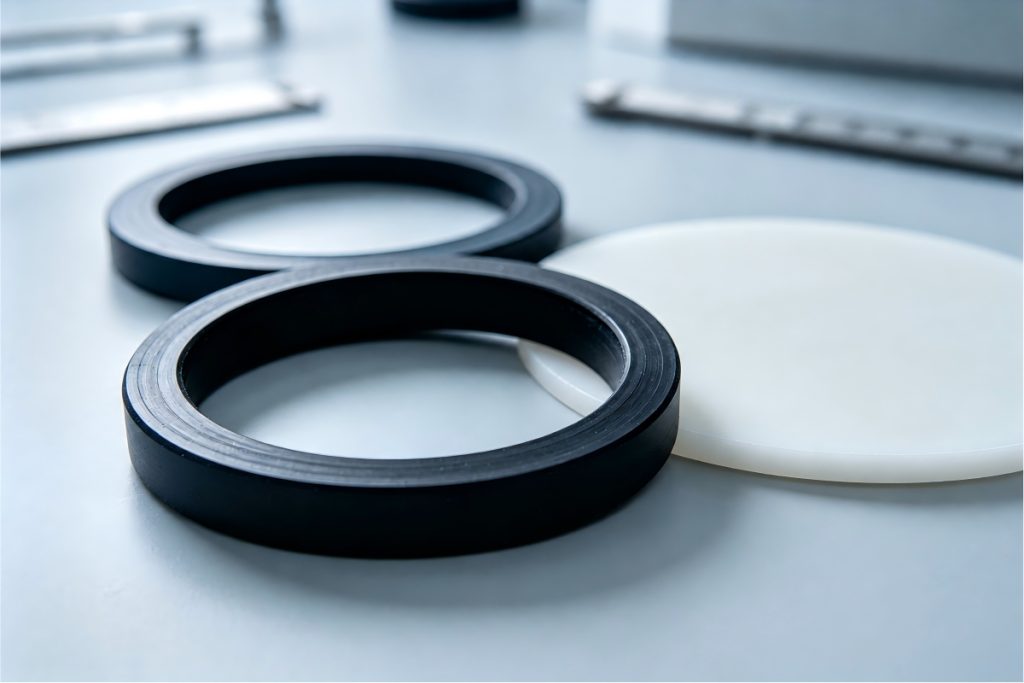
FFKM is the ASTM designation for perfluoroelastomer materials.
Its highly fluorinated polymer structure gives it broad chemical resistance while its cross-linked elastomer structure allows it to deform, recover and maintain sealing force. This combination is why FFKM is often used where PTFE provides suitable chemical resistance but a more elastic sealing material is required.
Trelleborg describes FFKM as combining the elastic properties of FKM with chemical resistance and thermal stability closer to PTFE. Specific commercial grades can be used at temperatures as high as approximately 325°C, although this capability does not apply to every FFKM compound.
Typical FFKM seal applications include:
- Chemical pumps and valves
- Mechanical seals
- Semiconductor process equipment
- Pharmaceutical production systems
- Reactors and mixers
- High-temperature piping
- Vacuum chambers
- Analytical instruments
- Oil and gas equipment
- CIP and SIP systems
Is FFKM Resistant to All Chemicals?
No.
FFKM provides one of the broadest chemical-resistance ranges available among elastomeric sealing materials, but no single compound should automatically be considered suitable for every chemical and temperature.
Commercial FFKM product families contain multiple formulations optimized for different operating conditions. Manufacturers specifically recommend selecting the grade that matches the chemicals and temperatures in the application.
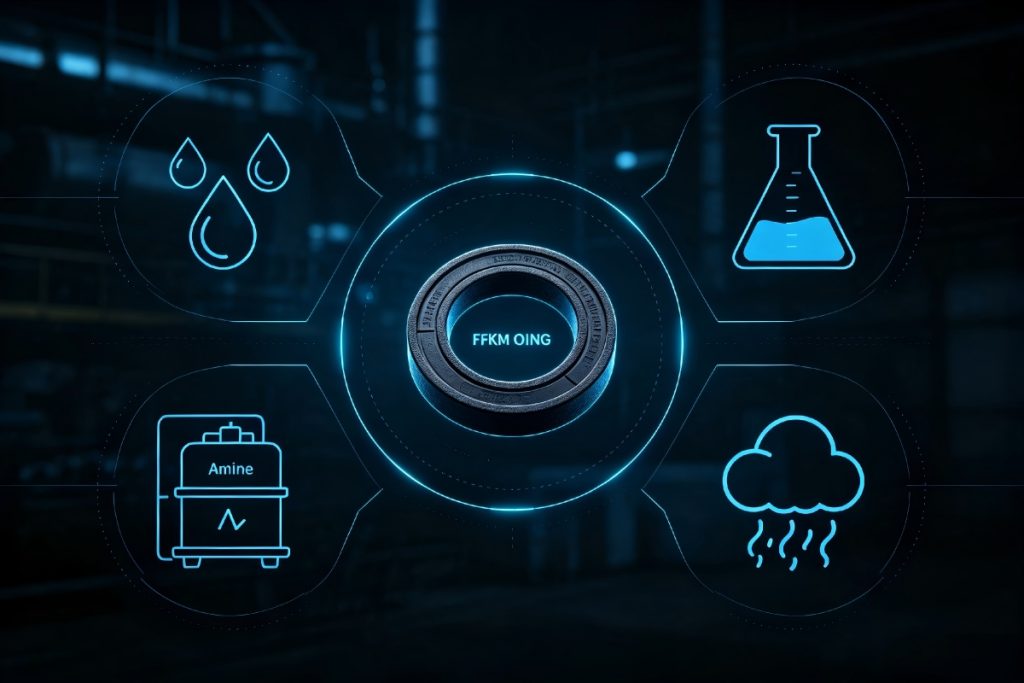
Compatibility can change because of:
- Chemical concentration
- Operating temperature
- Exposure duration
- Pressure
- Fluid mixtures
- Water content
- Process impurities
- Cleaning chemicals
- Temperature cycling
- Seal movement
- Compound formulation
A seal may perform well in a pure chemical at room temperature but deteriorate rapidly when the chemical is concentrated, heated or mixed with another fluid.
Quick FFKM Compatibility Overview
The following table is a starting point, not a final material approval.
| Chemical environment | General FFKM suitability | Main selection concern |
|---|---|---|
| Dilute inorganic acids | Often excellent | Temperature and concentration |
| Concentrated sulfuric acid | Often excellent with a suitable grade | Heat, oxidizing conditions and water content |
| Concentrated nitric acid | Grade-specific | Strong oxidation and elevated temperature |
| Organic acids | Often very good to excellent | Concentration, temperature and mixed solvents |
| Ketones | Frequently suitable | Swelling and temperature |
| Esters | Frequently suitable | Compound-specific volume change |
| Aromatic solvents | Generally excellent | Permeation and temperature |
| Chlorinated solvents | Generally excellent | Pressure, permeation and environmental requirements |
| Alcohols | Generally excellent | Mixtures and high-temperature exposure |
| Primary and secondary amines | Grade-specific | High chemical reactivity |
| Diamines | Requires special attention | Concentration and temperatures above 100°C |
| Hot water | Grade-specific | Hydrothermal aging and compression set |
| Steam | Requires a steam-resistant compound | Temperature, pressure and repeated cycling |
| Mixed process streams | Requires complete review | Interaction between all fluids |
FFKM Resistance to Acids
Acid service is one of the most common reasons engineers consider FFKM seals.
FFKM compounds can provide strong resistance to many organic and inorganic acids, including aggressive media that quickly attack NBR, EPDM or standard FKM compounds.
However, the word “acid” is not enough to select a seal. The supplier needs the exact chemical name, concentration, temperature and whether the acid has oxidizing characteristics.
Inorganic acids
Inorganic acids frequently encountered in industrial processes include:
- Sulfuric acid
- Nitric acid
- Hydrochloric acid
- Phosphoric acid
- Hydrofluoric acid
Suitable FFKM compounds can show low swelling and good retention of physical properties in many of these fluids. Official manufacturer testing has demonstrated that selected FFKM formulations can provide strong resistance to concentrated sulfuric acid and nitric acid under defined laboratory conditions.
This does not mean all grades will perform equally.
Sulfuric acid
When evaluating sulfuric acid, specify:
- Concentration
- Temperature
- Water content
- Presence of dissolved chemicals
- Static or flowing exposure
- Cleaning cycle conditions
A compound that works in dilute sulfuric acid may behave differently in hot, concentrated acid. Temperature can increase both chemical attack and seal swelling.
Nitric acid
Nitric acid requires particular care because it is a strong oxidizing medium.
Important factors include:
- Acid concentration
- Operating temperature
- Presence of other oxidizers
- Exposure time
- Seal color and filler system
- Purity requirements
Some FFKM formulations are specifically designed for oxidizing acids, while other general-purpose or high-temperature grades may not provide the same resistance.
Trelleborg’s historical material portfolio, for example, separated high-temperature grades from compounds developed for strong oxidizing media, demonstrating why the specific formulation matters more than the generic FFKM designation.
Hydrochloric and phosphoric acids
Many FFKM compounds are strong candidates for hydrochloric and phosphoric acid applications, particularly when conventional FKM has insufficient resistance.
The complete process should still be reviewed for:
- Acid concentration
- Elevated temperature
- Metal ions
- Cleaning chemicals
- Solvents
- Process contamination
The primary acid may not be the most aggressive fluid contacting the seal. A cleaning agent or secondary process chemical can sometimes determine the required compound.
Hydrofluoric acid
Hydrofluoric acid applications require a dedicated technical review.
Even when the polymer has suitable chemical resistance, compatibility can be influenced by:
- Concentration
- Water content
- Temperature
- Fillers
- Purity requirements
- Equipment materials
- Semiconductor contamination limits
For semiconductor wet processes, chemical resistance alone is not sufficient. Extractables, metal-ion content and particle generation may also be critical.
Organic acids
FFKM is also used with organic acids such as:
- Acetic acid
- Formic acid
- Citric acid
- Fatty acids
- Process-specific organic-acid mixtures
These fluids may be combined with solvents, water or oxidizers. The entire mixture must be evaluated rather than checking each major component separately.
FFKM Resistance to Solvents
Solvents can cause elastomer seals to swell, soften, shrink or lose mechanical strength.
FFKM is often selected because it provides broader solvent compatibility than FKM and many conventional elastomers.
Common solvent groups include:
- Ketones
- Esters
- Alcohols
- Aromatic hydrocarbons
- Aliphatic hydrocarbons
- Chlorinated solvents
- Ethers
- Polar aprotic solvents
Ketones
Ketones such as acetone and methyl ethyl ketone can be difficult for many elastomers.
Selected FFKM grades are specifically formulated for resistance to ketones. Parker laboratory data for one process-industry FFKM compound, for example, rated its resistance to methyl ethyl ketone as very good under the published test conditions. The same document emphasizes that laboratory results do not remove the need for application-specific suitability testing.
For ketone service, verify:
- Exact ketone
- Concentration
- Temperature
- Exposure time
- Presence of water
- Other solvents in the mixture
Esters
Esters may cause substantial swelling in incompatible elastomers.
Suitable chemical-processing FFKM compounds often provide strong resistance to ester-based media, but performance remains formulation-dependent.
Common examples include:
- Ethyl acetate
- Butyl acetate
- Process esters
- Ester-containing cleaning agents
- Synthetic ester lubricants
When the seal is used dynamically, even moderate swelling may increase friction or accelerate wear.
Aromatic and aliphatic hydrocarbons
FFKM generally provides excellent resistance to many hydrocarbon solvents and process fluids, including aromatic and aliphatic media.
Potential application concerns still include:
- High temperature
- Permeation
- Pressure cycling
- Rapid gas decompression
- Lubrication
- Dynamic wear
In high-pressure gas systems, chemical compatibility alone cannot confirm suitability. The compound may also need resistance to rapid gas decompression.
Chlorinated solvents
FFKM is frequently considered for chlorinated hydrocarbon service because of its broad chemical resistance.
The supplier should still be informed of:
- Exact solvent
- Operating temperature
- Fluid purity
- Vacuum conditions
- Process concentration
- Environmental or regulatory restrictions
In vacuum equipment, the selection may also depend on outgassing, permeation and contamination—not only visible swelling.
Alcohols
Many FFKM compounds provide excellent resistance to alcohols such as:
- Methanol
- Ethanol
- Isopropyl alcohol
- Glycols
The situation becomes more complex when alcohol is mixed with acids, bases, water or aggressive cleaning chemicals.
Mixed solvents
A compatibility chart for one pure solvent may not accurately predict performance in a solvent blend.
Mixed streams can produce different effects because:
- One component may increase polymer swelling
- One solvent may extract compound ingredients
- Water may change chemical activity
- Temperature may accelerate degradation
- The mixture composition may vary during operation
Provide the complete formulation whenever possible, including minor components.
FFKM Resistance to Amines
Amines are among the most important media to evaluate carefully when selecting an FFKM compound.
They are used in:
- Gas sweetening
- Refining
- Chemical synthesis
- Epoxy curing
- Carbon capture
- Pharmaceutical production
- Corrosion-inhibitor packages
- Semiconductor processing
Examples include:
- Monoethanolamine
- Diethanolamine
- Methyldiethanolamine
- Ethylenediamine
- Ammonia-containing solutions
- Process-specific amine blends
Why are amines difficult for seals?
Amines can attack certain elastomer formulations and curing systems, particularly at elevated temperatures.
Possible results include:
- Excessive swelling
- Softening
- Hardening
- Loss of tensile strength
- Increased compression set
- Reduced sealing force
- Surface degradation
An FFKM compound intended mainly for dry high-temperature service may not be suitable for hot amines.
Hot amines require a specialized grade
Amines become more demanding when:
- Concentration increases
- Temperature rises
- Water is present
- The fluid contains corrosion inhibitors
- The process operates under pressure
- Exposure is continuous
Specific FFKM formulations have been developed for acids, amines, solvents and hot water or steam. Manufacturer data for one process-grade compound illustrates excellent ratings in amines and ammonium hydroxide under its stated test conditions.
By contrast, Trelleborg’s material guidance has identified certain high-temperature FFKM grades that are not recommended for hot water, steam or hot aliphatic amines. This illustrates why maximum temperature capability cannot be used as a substitute for chemical compatibility.
Diamines
High concentrations of some diamines can be particularly severe.
Trelleborg advises testing perfluoroelastomer parts used with high concentrations of certain diamines, especially at temperatures above 100°C. The same guidance warns that short-term laboratory tests may not fully reproduce long-term field conditions.
For amine service, provide:
- Full chemical name
- Amine concentration
- Water concentration
- Operating and peak temperatures
- Pressure
- Other process additives
- Exposure duration
- Current seal material and failure mode
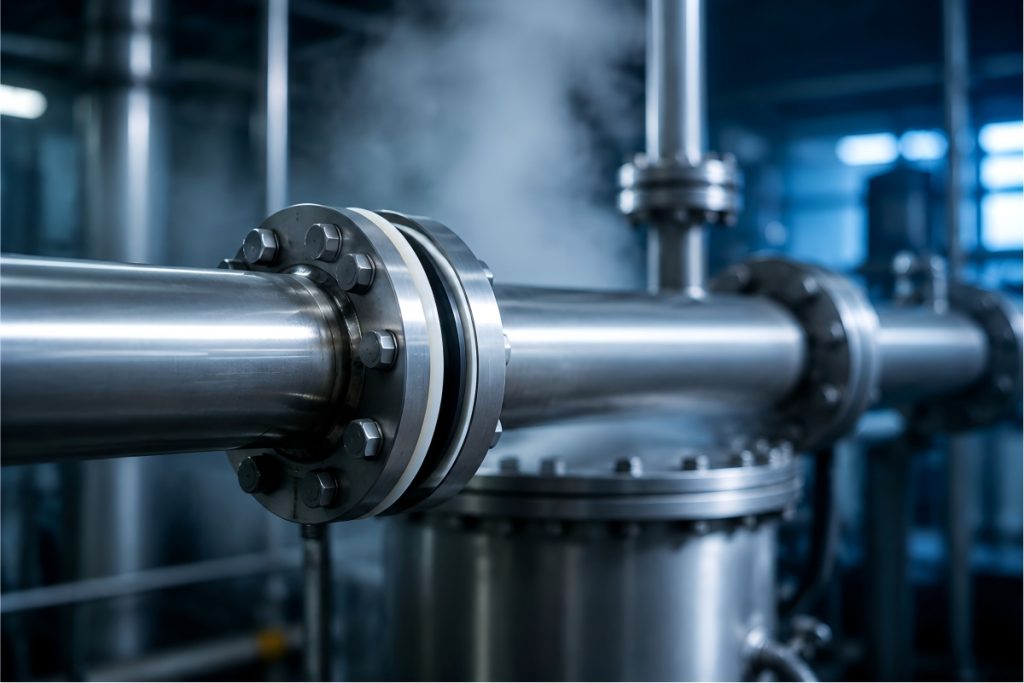
FFKM Resistance to Hot Water and Steam
Steam is frequently misunderstood in elastomer selection.
A material may have a high dry-air temperature rating but still perform poorly in pressurized steam or hot water. Dry heat resistance and hydrothermal resistance are different requirements.
Why steam is difficult
Steam can create several simultaneous stresses:
- High temperature
- Water exposure
- Pressure
- Thermal cycling
- Chemical cleaning agents
- Compression set
- Rapid heating and cooling
Repeated sterilization cycles may be more damaging than stable exposure because the seal repeatedly expands, contracts and recovers.
Not every FFKM grade is steam-resistant
Some FFKM compounds are designed specifically for:
- Hot water
- Pressurized steam
- Steam-in-place
- Clean-in-place
- Sterilization cycles
- Pharmaceutical processes
Other grades are optimized for high-temperature dry service and may not be recommended for steam.
Manufacturer portfolios clearly separate general-purpose, high-temperature, oxidizing-media and steam-resistant formulations. For example, selected FFKM grades are described for acids, amines and steam, while certain high-temperature grades carry explicit limitations for hot water and steam.
Steam parameters to provide
A steam application should be defined using:
- Steam temperature
- Steam pressure
- Saturated or superheated steam
- Continuous exposure or cycling
- Cycle duration
- Number of cycles
- Heating and cooling rate
- Cleaning chemicals
- Required service life
Do not describe the application only as “steam resistant.”
CIP and SIP systems
For clean-in-place and steam-in-place systems, the seal may contact several different environments:
- Product media
- Alkaline cleaner
- Acid cleaner
- Rinse water
- Sanitizing chemicals
- Pressurized steam
The compound must be compatible with the complete cycle.
Pharmaceutical and food-processing applications may also require:
- FDA-related compliance
- USP testing
- Low extractables
- Batch traceability
- Cleaning validation
- Documentation for the specific compound
General FFKM material status does not automatically confirm regulatory compliance. Compliance must be verified for the actual formulation and finished seal.
How Chemical Attack Causes FFKM Seal Failure
Even premium FFKM seals can fail when the compound or seal design is unsuitable.
| Failure symptom | Possible cause |
|---|---|
| Excessive swelling | Chemical absorption or incompatible compound |
| Seal extrusion | Swelling combined with pressure or insufficient gland space |
| Softening | Polymer or compound degradation |
| Hardening | Heat aging or chemical reaction |
| Cracking | Chemical degradation, thermal cycling or mechanical stress |
| Permanent flattening | Excessive compression set |
| Shrinkage | Extraction of compound ingredients |
| Surface blistering | Chemical attack, pressure or decompression |
| Leakage after steam cycles | Loss of sealing force or unsuitable steam grade |
| Early dynamic wear | Swelling, friction or insufficient lubrication |
Chemically induced swelling can fill the available gland space and force an O-ring into the extrusion gap. Manufacturer guidance identifies low volume change as an important indicator when screening a compound for aggressive chemicals.
Chemical Compatibility Is More Than Volume Swell
Volume change is important, but it should not be the only acceptance criterion.
A chemical immersion test may evaluate:
- Volume change
- Weight change
- Hardness change
- Tensile-strength retention
- Elongation retention
- Visual damage
- Compression set
- Seal-force retention
For critical applications, testing should use:
- The actual FFKM compound
- The real process fluid
- Actual chemical concentration
- Normal operating temperature
- Maximum temperature
- Representative exposure time
A compound with low swelling may still lose sealing force or mechanical strength.
Why Laboratory Compatibility Charts Have Limits
Chemical compatibility charts are useful for preliminary screening, but they cannot represent every field condition.
Published ratings may be based on:
- Pure chemicals
- Fixed concentrations
- Short immersion periods
- Standard laboratory samples
- Stable temperatures
- No pressure
- No seal movement
Real processes may contain impurities, changing concentrations, repeated temperature cycles and mechanical loads.
Trelleborg’s compatibility guidance specifically states that published immersion data may not fully represent field conditions and recommends application testing, particularly for demanding fluids and elevated temperatures.
FFKM Compound Selection Checklist
Before requesting a recommendation, provide the following information.
Chemical information
- Complete chemical names
- Concentrations
- Water content
- Minor ingredients
- Process contaminants
- Cleaning agents
- Sterilization media
- Lubricants
Temperature information
- Minimum temperature
- Normal temperature
- Maximum continuous temperature
- Short-term peak temperature
- Cleaning temperature
- Steam temperature
Pressure information
- Normal pressure
- Maximum pressure
- Vacuum level
- Pressure cycling
- Decompression rate
Mechanical information
- Static or dynamic seal
- Reciprocating or rotary motion
- Speed and stroke
- Groove dimensions
- Extrusion gap
- Surface finish
- Seal size
Commercial and quality information
- Required service life
- Current seal life
- Existing failure symptoms
- Annual quantity
- Regulatory requirements
- Traceability requirements
- Drawing or physical sample
Common FFKM Selection Mistakes
Selecting by material name alone
“FFKM” is not a complete material specification. Always request a specific compound recommendation.
Ignoring concentration
A material may perform differently in 10% acid than in 98% acid.
Ignoring temperature
Compatibility can decrease significantly as temperature increases.
Checking only the main process fluid
Cleaning agents and temporary process chemicals must also be evaluated.
Choosing the highest-temperature grade
The grade with the highest dry-heat rating may not provide the best steam or amine resistance.
Assuming all chemical mixtures behave like pure fluids
Mixed streams require separate evaluation.
Replacing FKM with FFKM without reviewing the gland
Differences in hardness, swelling and thermal expansion can affect seal squeeze and groove filling.
Skipping application testing
For critical processes, laboratory and equipment-level validation may be necessary.
Conclusion
FFKM seals provide exceptionally broad resistance to acids, solvents, amines and steam, but successful sealing depends on selecting the right compound for the complete operating environment.
For acid applications, evaluate concentration, oxidizing behavior and temperature.
For solvent applications, consider the exact solvent mixture, swelling, mechanical-property retention and operating heat.
For amine applications, use an amine-resistant formulation and pay particular attention to hot, concentrated or diamine-containing fluids.
For steam applications, select a compound specifically designed for hot water and pressurized steam rather than relying on a dry-air temperature rating.
The final FFKM selection should consider:
- Every process and cleaning chemical
- Concentration
- Temperature
- Pressure
- Exposure duration
- Seal movement
- Groove design
- Required service life
When the cost of leakage, contamination or downtime is high, application-specific testing is often more valuable than relying on a generic compatibility chart.
Frequently Asked Questions
Is FFKM resistant to sulfuric acid?
Many FFKM compounds provide excellent resistance to sulfuric acid, but suitability depends on concentration, temperature and the specific compound.
Can FFKM be used with nitric acid?
Yes, selected FFKM compounds are designed for oxidizing acids such as nitric acid. High concentration and elevated temperature require careful grade selection and testing.
Is FFKM resistant to acetone and MEK?
Many chemical-processing FFKM grades provide strong resistance to ketones such as acetone and MEK. The exact solvent, temperature and exposure conditions must still be verified.
Are all FFKM seals resistant to amines?
No. Hot and concentrated amines can be challenging, and some FFKM grades are better suited to amine service than others.
Can FFKM seals be used in steam?
Yes, but a steam-resistant FFKM compound should be selected. Some high-temperature FFKM grades are not recommended for hot water or steam.
Is the highest-temperature FFKM also the most chemically resistant?
Not necessarily. A grade optimized for extreme dry heat may have different resistance to steam, amines or oxidizing chemicals.
How should FFKM chemical compatibility be tested?
The compound should be exposed to the actual chemical mixture at representative concentration, temperature and duration. Volume change, hardness, tensile properties and sealing performance should be evaluated.
Can a chemical compatibility chart guarantee seal life?
No. Compatibility charts are screening tools. Pressure, movement, gland design, temperature cycling and long-term exposure also affect service life.
Need an FFKM Compound Recommendation?
Walle Seals provides custom FFKM O-rings, gaskets and molded sealing components for chemical processing, semiconductor, pharmaceutical, vacuum and high-temperature applications.
Send us:
- Chemical names and concentrations
- Operating and peak temperatures
- Pressure or vacuum conditions
- Seal dimensions
- Drawing or sample
- Current seal material
- Existing failure symptoms
Our engineering team will review your application and recommend a suitable FFKM sealing solution.
No responses yet