



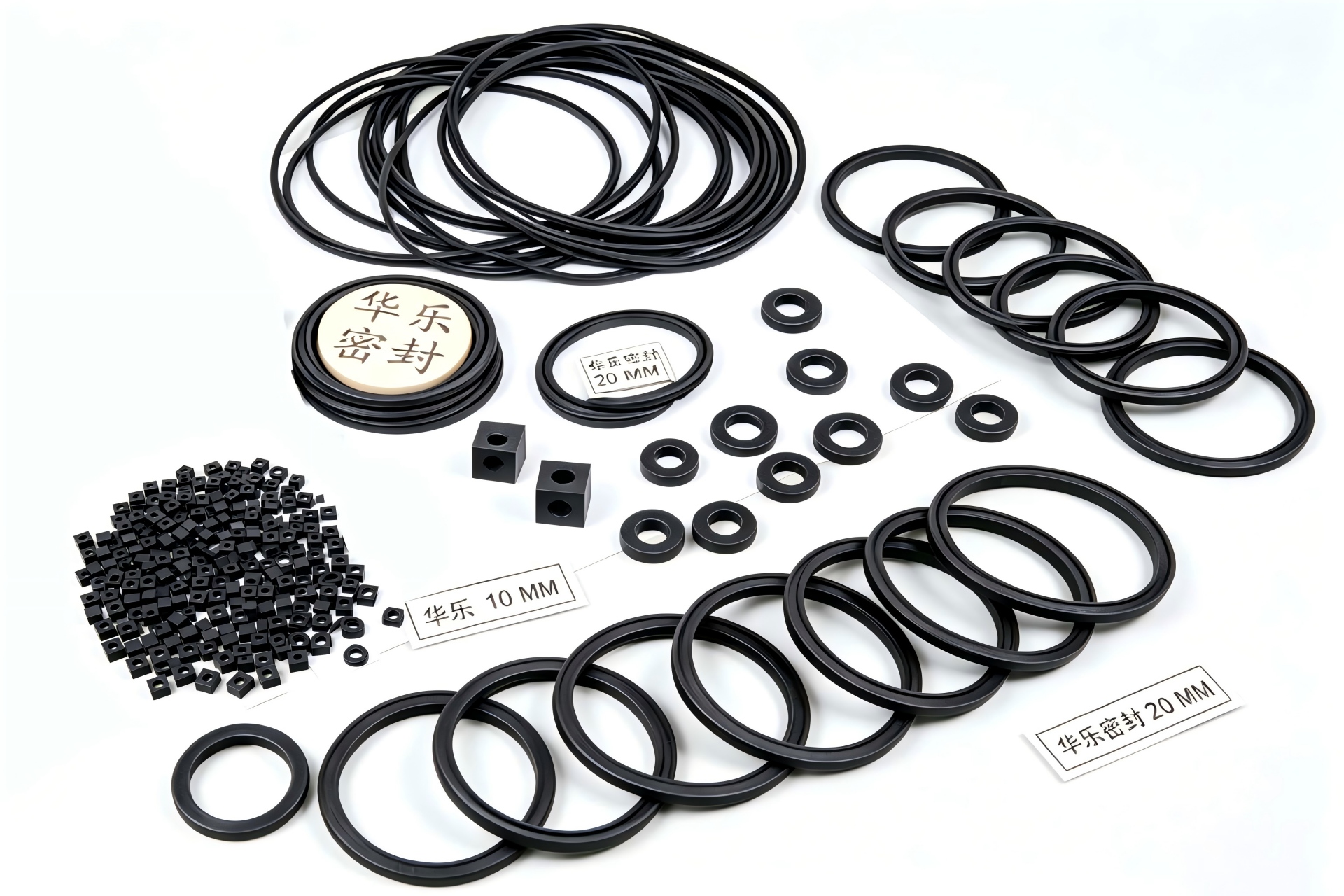
Acrylate rubber (ACM), fully known as alkyl acrylate copolymer, is a special type of synthetic rubber produced by the copolymerisation of acrylates with a small amount of cross-linking monomers. It possesses excellent resistance to high-temperature oils and good resistance to thermal and oxidative ageing, positioning it between nitrile rubber and fluorocarbon rubber.
ACM exhibits excellent resistance to high-temperature lubricating oils, transmission oils and extreme-pressure gear oils containing additives such as sulphur, phosphorus and chlorine. It demonstrates minimal dimensional change and high performance retention in high-temperature oil baths at 150°C; its oil resistance is superior to that of nitrile rubber (NBR) but inferior to that of fluorocarbon rubber (FKM). However, ACM is not resistant to low-polarity mineral oils, fuel oils, aromatic solvents, water or water vapour.
Acrylate rubber has outstanding heat resistance, with an operating temperature range of -30°C to +175°C, and can withstand short-term exposure to +200°C. It retains good elasticity and low compression set even at high temperatures. However, its cold resistance is poor; the low-temperature brittleness of standard ACM is approximately -20°C to -30°C, whilst special cold-resistant ACM can withstand temperatures as low as -40°C.
ACM possesses excellent resistance to ozone and weathering; it is less prone to cracking when exposed to the outdoors for extended periods, outperforming NBR in this respect. However, its mechanical strength is moderate, with tensile strength typically ranging between 10 and 15 MPa, and its tear strength is relatively low. Its abrasion resistance is average, making it unsuitable for applications involving high wear or frequent dynamic friction. Furthermore, whilst ACM offers good electrical insulation properties, it is not as effective as silicone rubber in this regard. Furthermore, acrylate rubber performs excellently in applications requiring extremely high thermal oxidation stability; however, it has poor hydrolytic resistance and is not resistant to hot water, steam, or acidic and alkaline media, deteriorating rapidly in damp or aqueous environments. During processing, a specialised vulcanisation system (such as soap-based vulcanising agents) must be used, and it is highly corrosive to moulds.
ACM seals, i.e. seals manufactured from acrylate rubber, play an irreplaceable role in automotive drivetrains, gearboxes, engine peripherals and industrial equipment requiring prolonged contact with hot oil, owing to their exceptional resistance to high-temperature oils and wide heat resistance range.
Automotive Automatic Transmissions and Power Steering Systems: In transmission oil circuit seals, shift actuator piston seals, torque converter seals and power steering pump shaft seals, ACM seals can withstand the high-temperature operating conditions of automatic transmission fluid (ATF) at around 150°C for extended periods, whilst maintaining low compression set, preventing hydraulic leakage and ensuring smooth gear changes.
Engines and associated components: In engine oil pan gaskets, valve cover gaskets, crankshaft and camshaft oil seals (non-high-speed rotating), engine oil cooler seals, and turbocharger lubricant pipe joints, ACM material withstands ageing caused by high-temperature engine oil and hot air in the engine compartment. Its service life far exceeds that of NBR, making it a cost-effective upgrade material for seals in small and medium-sized engines.
Industrial Gearboxes and Hydraulic Systems: In industrial gearbox input shaft seals, gear pump end cover O-rings, hydraulic valve block gaskets, and high-temperature hydraulic press line seals, ACM seals demonstrate excellent compatibility with gear oils containing extreme pressure additives and anti-wear hydraulic fluids, enabling long-term reliable operation at oil temperatures of 120–150°C.
Automotive air conditioning compressors and refrigeration systems: In swashplate air conditioning compressor shaft seals, pipe O-rings and piston seals, ACM exhibits good resistance to refrigeration oils (PAG, POE) and is impervious to refrigerant (R134a, etc.) permeation. Combined with its high-temperature resistance, it is suitable for the high-temperature environment of air conditioning piping within the engine compartment.
High-temperature electrical equipment and industrial furnace doors: In high-temperature motor bearing seals, fan bearing dust caps, industrial furnace door viewing window seals and oven door gaskets, ACM can withstand prolonged exposure to non-contact high-temperature air (below 175°C), whereas ordinary rubber would rapidly harden and fail at these temperatures.
Motorcycles and small engines: In applications such as motorcycle engine crankcase seals, clutch pushrod oil seals, alternator seals, and fuel system seals for garden machinery (lawnmowers, chainsaws) (excluding alcohol-based fuels), ACM provides a cost-effective high-temperature hot oil sealing solution.
It should be noted that ACM seals must not be used in contact with water, water vapour, ethylene glycol-based coolants, brake fluids (DOT grades), fuel (petrol/diesel) or in low-temperature conditions (below -30°C). In these media, FKM, EPDM or silicone rubber should be selected.
In summary, acrylate rubber materials and their ACM seals play a key role in automotive gearboxes, engine peripherals, industrial gearboxes and high-temperature oil sealing applications due to their exceptional resistance to high-temperature oils, good resistance to thermal ageing and superior retention of high-temperature performance compared to NBR. They represent an ideal medium-to-high-temperature oil-resistant sealing material positioned between nitrile rubber and fluorocarbon rubber.
Comments are closed