

Top 10 Causes of O-Ring Failure and How to Prevent Them
O-rings are among the most widely used sealing components in hydraulic systems, pneumatic equipment, automotive assemblies, chemical processing plants, and industrial machinery.
Although O-rings are relatively simple and cost-effective, seal failure remains one of the leading causes of equipment leakage, production downtime, and maintenance expenses.
According to sealing industry statistics, most O-ring failures are not caused by manufacturing defects. Instead, they result from improper material selection, installation errors, unsuitable operating conditions, or poor system design.
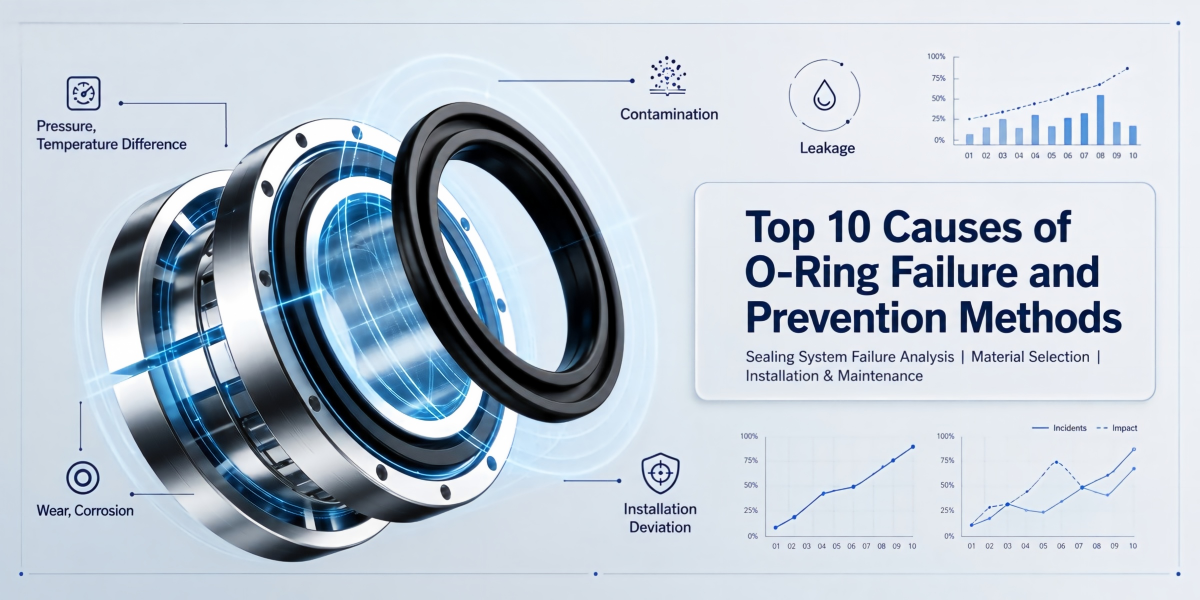
This guide explores the ten most common causes of O-ring failure and provides practical solutions to help engineers, maintenance teams, and buyers improve sealing reliability.
1. Compression Set
What Is Compression Set?
Compression set occurs when an O-ring loses its ability to return to its original shape after prolonged compression.
Over time, the elastomer becomes permanently deformed and can no longer maintain adequate sealing force.
Symptoms
- Gradual leakage
- Flattened O-ring cross-section
- Reduced sealing effectiveness
- Increased maintenance frequency
Common Causes
- Excessive temperature
- Long-term static compression
- Poor material selection
- Aging of elastomer compounds
Prevention
- Choose materials with low compression set characteristics
- Use FKM or FFKM in high-temperature environments
- Avoid excessive gland compression
- Replace seals during scheduled maintenance
2. Chemical Attack
What Happens During Chemical Degradation?
When an O-ring is exposed to incompatible chemicals, the material may:
- Swell
- Shrink
- Harden
- Soften
- Crack
Even minor chemical incompatibility can significantly shorten seal life.
Examples
| Material | Poor Resistance To |
|---|---|
| NBR | Ketones, strong acids |
| EPDM | Petroleum oils |
| Silicone | Certain solvents |
| FKM | Some amines and steam applications |
Prevention
- Review chemical compatibility charts
- Test materials before large-scale deployment
- Consult experienced seal manufacturers
3. Excessive Temperature
Temperature is one of the most destructive factors affecting elastomer performance.
High Temperature Effects
- Hardening
- Loss of elasticity
- Accelerated aging
- Increased compression set
Low Temperature Effects
- Brittleness
- Cracking
- Reduced flexibility
- Seal shrinkage
Prevention
Select materials suitable for operating temperatures:
| Material | Temperature Range |
|---|---|
| NBR | -40°C to 120°C |
| EPDM | -50°C to 150°C |
| Silicone | -60°C to 230°C |
| FKM | -20°C to 250°C |
| FFKM | Up to 320°C |
4. O-Ring Extrusion
What Is Extrusion?
Extrusion occurs when the O-ring is forced into the clearance gap between mating components under pressure.
The material becomes pinched and eventually tears.
Signs of Extrusion
- Nibbling damage
- Torn edges
- Pieces missing from the seal
- Sudden leakage
Causes
- Excessive pressure
- Large clearance gaps
- Low hardness compounds
Prevention
- Use backup rings
- Increase O-ring hardness
- Reduce clearance gaps
- Improve groove design
5. Improper Installation
Installation damage is one of the most common and preventable causes of O-ring failure.
Typical Installation Errors
- Twisting the O-ring
- Overstretching
- Sharp edge damage
- Tool scratches
- Pinching during assembly
Signs
- Immediate leakage
- Surface cuts
- Spiral damage
- Uneven wear
Prevention
- Use proper installation tools
- Lubricate seals before assembly
- Remove sharp edges
- Train maintenance personnel
6. Abrasion and Wear
Dynamic sealing applications expose O-rings to continuous friction.
Common Dynamic Applications
- Hydraulic cylinders
- Pneumatic actuators
- Pumps
- Rotary shafts
Symptoms
- Surface wear
- Material loss
- Reduced sealing force
- Leakage after extended operation
Prevention
- Select wear-resistant materials
- Improve surface finish quality
- Use proper lubrication
- Reduce side loading
7. Spiral Failure
What Is Spiral Failure?
Spiral failure occurs when the O-ring twists within the gland during reciprocating movement.
The seal develops a characteristic spiral cut pattern.
Causes
- Rapid pressure cycling
- Excessive friction
- Poor lubrication
- Improper groove design
Prevention
- Improve lubrication
- Optimize groove dimensions
- Use specialized dynamic sealing compounds
- Reduce system vibration
8. Ozone and Weather Cracking
Outdoor applications often expose seals to:
- Sunlight
- Ozone
- Humidity
- Weather fluctuations
Certain elastomers are highly susceptible to environmental degradation.
Materials Vulnerable to Ozone
- NBR
- Natural rubber
Materials Resistant to Ozone
- EPDM
- Silicone
- FKM
Prevention
- Choose weather-resistant compounds
- Store seals properly
- Avoid prolonged UV exposure
9. Pressure Shock and Pressure Cycling
Rapid pressure fluctuations place significant stress on sealing systems.
Effects
- Material fatigue
- Extrusion damage
- Seal deformation
- Reduced service life
Typical Industries
- Hydraulics
- Oil and gas
- Heavy equipment
- Industrial automation
Prevention
- Install pressure relief systems
- Use harder compounds
- Add backup rings
- Design for peak pressure conditions
10. Incorrect O-Ring Size Selection
Even the best material will fail if the O-ring size is incorrect.
Common Sizing Problems
- Excessive stretch
- Insufficient squeeze
- Oversized grooves
- Undersized grooves
Consequences
- Leakage
- Accelerated wear
- Installation damage
- Reduced seal life
Prevention
- Follow AS568 or ISO 3601 standards
- Verify gland dimensions
- Measure groove dimensions carefully
- Confirm tolerance requirements
O-Ring Failure Analysis Checklist
When diagnosing an O-ring failure, inspect the seal for the following:
| Failure Symptom | Likely Cause |
|---|---|
| Flattened shape | Compression set |
| Swelling | Chemical attack |
| Hardening | Excessive heat |
| Cracking | Aging or ozone |
| Torn edges | Extrusion |
| Spiral cuts | Twisting |
| Surface wear | Abrasion |
| Immediate leakage | Installation damage |
A systematic failure analysis often reveals the root cause and helps prevent repeated failures.
How to Extend O-Ring Service Life
To maximize seal performance:
Select the Correct Material
Material selection should consider:
- Temperature
- Pressure
- Chemical exposure
- Environmental conditions
Use Proper Installation Procedures
Avoid unnecessary stretching, twisting, and handling damage.
Follow Industry Standards
Design grooves according to:
- AS568
- ISO 3601
- Parker O-Ring Handbook recommendations
Perform Regular Inspections
Preventive maintenance can identify problems before leakage occurs.
Conclusion
Most O-ring failures are preventable.
The ten most common causes of failure include:
- Compression set
- Chemical attack
- Excessive temperature
- Extrusion
- Improper installation
- Abrasion
- Spiral failure
- Ozone damage
- Pressure cycling
- Incorrect sizing
By selecting the right material, optimizing seal design, and following proper installation procedures, companies can significantly reduce downtime, maintenance costs, and equipment failures.
A proactive sealing strategy not only improves reliability but also extends the life of critical equipment.
Frequently Asked Questions
What is the most common cause of O-ring failure?
Compression set and improper material selection are among the most common causes of seal failure.
How can I tell if an O-ring failed due to chemical attack?
Signs include swelling, softening, hardening, discoloration, and cracking after exposure to chemicals.
Why does my O-ring keep leaking even after replacement?
The root cause may be incorrect material selection, poor groove design, excessive pressure, or installation damage rather than the seal itself.
Can O-ring failure be completely prevented?
While no seal lasts forever, proper design, material selection, and maintenance can dramatically extend service life and reduce failure rates.
CTA
Experiencing Frequent O-Ring Failures?
Our engineering team specializes in diagnosing sealing problems and recommending the most suitable O-ring materials for demanding applications.
We provide custom O-rings in NBR, FKM, EPDM, Silicone, HNBR, and FFKM compounds for industries worldwide.
Contact us today for expert sealing solutions, free technical consultation, and competitive quotations.
No responses yet