



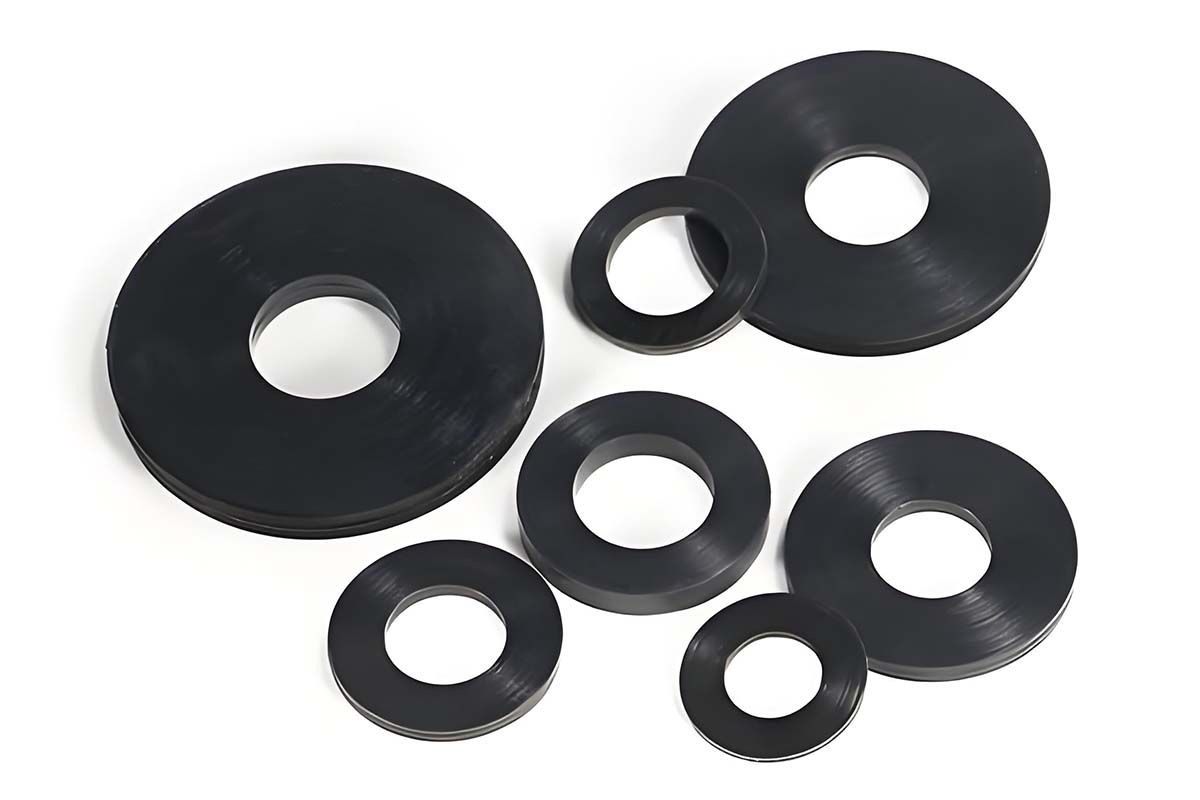
Styrene-butadiene rubber (SBR), the full name of which is styrene-butadiene copolymer, is a general-purpose synthetic rubber produced by the emulsion or solution polymerisation of butadiene and styrene. It is the synthetic rubber variety with the highest production volume and the widest range of applications worldwide, offering well-balanced overall performance and significant cost advantages.
SBR possesses excellent wear resistance, comparable to that of natural rubber, and in certain formulations reinforced with hard carbon black, it even outperforms natural rubber. At the same time, it offers good resistance to wet slippage and generates low dynamic heat, making it suitable for sealing components subjected to sliding friction and cyclic deformation.
Styrene-butadiene rubber exhibits good resistance to dilute acids, dilute alkalis, alcohols, water and various salt solutions, and its water resistance is superior to that of natural rubber. However, it is not resistant to mineral oils, fuels, non-polar solvents (such as benzene, toluene and petrol) or strongly oxidising media. Its poor oil resistance is the primary limiting factor in its use for sealing applications, as contact with oils causes rapid swelling.
SBR has moderate mechanical strength; its strength is very low when unreinforced, but tensile strength can reach 15–20 MPa when reinforced with carbon black. Its tear strength is lower than that of natural rubber, and its elasticity is also inferior to NR, though it is superior to nitrile rubber. It possesses good processability and adhesion to fibres and metal reinforcements, facilitating the manufacture of composite seals.
The operating temperature range for styrene-butadiene rubber is generally -40°C to +100°C, though special cold-resistant formulations can withstand temperatures as low as -50°C. Its resistance to heat ageing is superior to that of natural rubber, but its performance deteriorates significantly at temperatures above 100°C. It has poor resistance to ozone and weathering; prolonged outdoor exposure can cause cracking, so it typically requires the addition of antioxidants or blending with materials such as chloroprene rubber for outdoor applications.
Furthermore, SBR possesses good electrical insulation properties and a high volume resistivity. Its airtightness is superior to that of natural rubber but inferior to that of butyl rubber. As its cost is significantly lower than that of natural rubber and other speciality rubbers, it is one of the preferred materials for sealing applications where value for money is a priority.
SBR seals, i.e. sealing rings manufactured from styrene-butadiene rubber, are widely used in a variety of general-purpose sealing scenarios that do not involve oil resistance, high temperatures or severe ozone exposure, owing to their excellent wear resistance, balanced physical properties and outstanding cost advantages.
Automotive tyre and inner tube sealing: In the airtight layer of tubeless tyres, inner tube valve stem gaskets, tyre vulcanised capsule seals, and rubber strips securing wheel balancing weights, SBR seals utilise their excellent airtightness and wear resistance to help maintain tyre pressure and extend tyre service life. It is the most widely used rubber material in the tyre industry.
General industrial products: In sealing rings at both ends of industrial rubber rollers, sealing strips for conveyor belt sidewalls, rubber-coated seals for drive rollers, rubber spring pads for vibrating screens, and vibration-damping seals for fans, the wear resistance and fatigue resistance of SBR enable it to withstand prolonged material friction and vibration loads, making it suitable for applications in mining, building materials, ports and similar environments.
Water Supply, Drainage and Plumbing: In cold water pipe flange gaskets, tap sealing washers, shower hose connector seals, toilet cistern fittings and water pump leak-proof gaskets, SBR offers excellent resistance to clean water at room temperature and is cost-effective. However, care must be taken to avoid its use with hot water (>60°C) or oil-containing media.
Sports Equipment and Consumer Goods: In applications such as sealing strips for sports shoe outsoles, cushioning rings for knee pads, sealing rings for swimming goggles, sealing gaskets for thermos flask lids, and sealing diaphragms for pneumatic components in toys, SBR’s flexibility, abrasion resistance and colourability provide excellent sealing performance and a comfortable user experience, whilst meeting environmental requirements.
Agricultural and horticultural machinery: In sprayer connector seals, irrigation pipe gaskets, low-pressure return line seals for agricultural machinery hydraulic systems (non-mineral oil), and grain dryer door seals, SBR seals can withstand chemical fertilisers, pesticide solutions and UV ageing (when anti-ageing agents are added), whilst being cost-effective and easy to replace in bulk.
Low-pressure pneumatic and vacuum suction cups: In pneumatic tool gaskets, vacuum suction cup sealing lips, suction valve discs for packaging machinery, and sealing rings for laboratory vacuum dryers, SBR’s airtightness and resilience meet the sealing requirements of low-pressure (<1 MPa) pneumatic systems; however, its vacuum resistance is inferior to that of butyl rubber, making it unsuitable for high-vacuum applications.
Furthermore, SBR seals are widely used for dust and waterproof sealing in hardware and electrical machinery, daily consumer goods, toy manufacturing, craft gifts, and general industrial equipment. They are particularly suitable for non-critical sealing applications where oil resistance is not required, ambient temperatures are moderate, and low-cost, high-volume production is sought.
In summary, styrene-butadiene rubber (SBR) and SBR seals, owing to their balanced abrasion resistance, good water resistance, excellent processability and significant cost advantages, play a fundamental sealing role in sectors such as tyres, general industrial products, water supply and drainage, sports equipment and agricultural machinery. They are cost-effective sealing materials tailor-made for economical, general-purpose applications.
Comments are closed