


Butyl rubber (IIR), whose full name is isobutylene-isoprene rubber, is a synthetic rubber produced by cationic polymerisation of isobutylene and a small amount of isoprene. It features extremely low gas permeability and excellent resistance to chemical media and thermal ageing.
IIR possesses the lowest gas permeability of all general-purpose rubbers; its permeability coefficient is merely 1/20 that of natural rubber and 1/10 that of nitrile rubber. It offers exceptional airtightness and is therefore widely used in vacuum sealing and gas retention applications. Furthermore, it exhibits extremely low water vapour permeability, providing excellent waterproof sealing performance.
Butyl rubber exhibits exceptional resistance to concentrated acids (such as sulphuric acid, hydrochloric acid and hydrofluoric acid), concentrated alkalis, oxidising solutions, polar solvents (such as alcohols, ketones and esters) and many salt solutions, with chemical resistance superior to that of most general-purpose rubbers. However, it is not resistant to mineral oils, fuels or non-polar solvents (such as benzene, petrol and kerosene), and will swell severely upon contact with oils.
IIR possesses high heat resistance, with an operating temperature range of -50°C to +120°C; specialised brominated or chlorinated butyl rubber can operate at +150°C for short periods. It exhibits excellent weather resistance, ozone resistance and ageing resistance; it is not prone to cracking during long-term outdoor use, outperforming natural rubber and styrene-butadiene rubber.
Butyl rubber has moderate mechanical strength, with tensile strength generally ranging from 10 to 15 MPa; it has poor elasticity and significantly lower resilience than natural rubber. Its compression set is relatively high at elevated temperatures, making it unsuitable for dynamic seals requiring high resilience or high-frequency reciprocating motion. However, through halogenation (e.g., chlorobutyl rubber (CIIR) and bromobutyl rubber (BIIR)), its vulcanisation characteristics, adhesion properties and heat resistance can be improved.
Furthermore, IIR possesses good shock-absorbing and vibration-damping properties, enabling it to effectively absorb mechanical vibrations and impact energy. It has good biocompatibility and is non-toxic and odourless, making it suitable for applications involving contact with food and pharmaceuticals. However, IIR is not resistant to low temperatures or crystalline media, and will gradually harden at temperatures below -30°C.
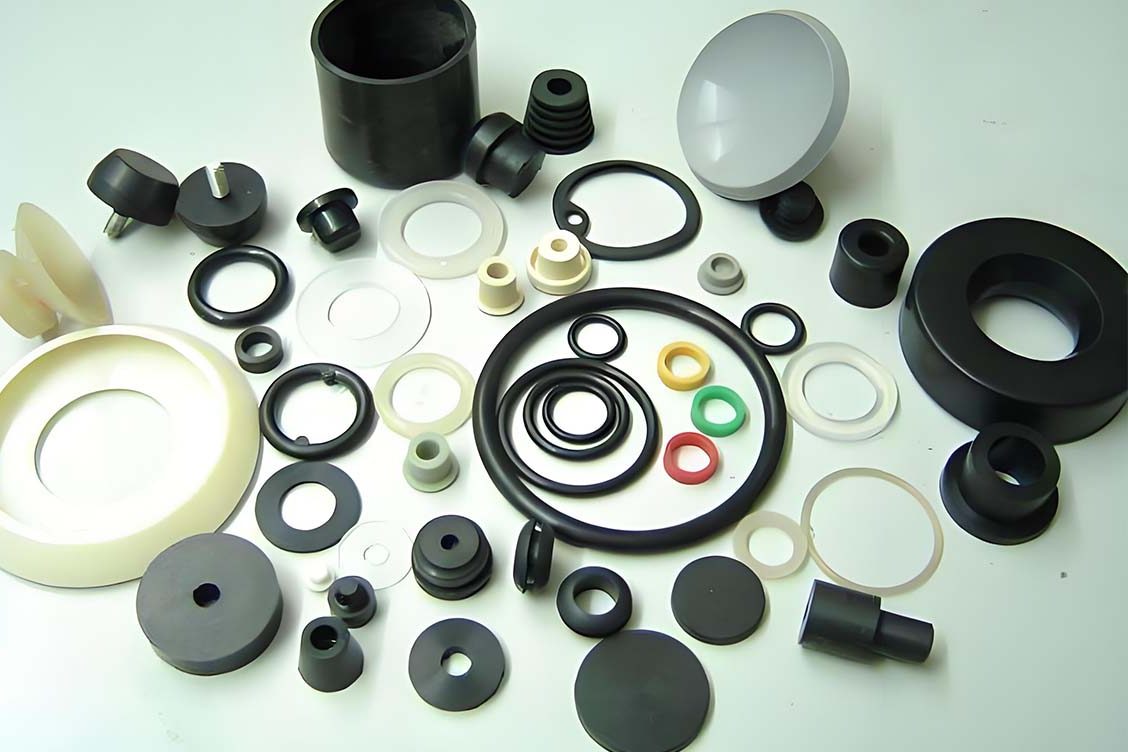
IIR seals, i.e. sealing rings made from butyl rubber, play an irreplaceable role in fields requiring high-level sealing, such as the chemical, vacuum, pharmaceutical and food packaging industries, due to their extremely low gas permeability, excellent resistance to acids and alkalis, and outstanding airtightness and vacuum retention properties.
Vacuum and gas sealing systems: In applications such as door seals for vacuum drying equipment, observation window seals for vacuum furnaces, chamber seals for semiconductor manufacturing, gasket seals for mass spectrometer interfaces, and diaphragms for high-pressure gas valves, IIR seals—with their minimal helium leakage rates and extremely low outgassing rates—are capable of maintaining high-vacuum or high-pressure gas-tight conditions over extended periods, making them the ideal sealing material for vacuum technology.
Chemical Storage, Transport and Highly Corrosive Media: In applications such as manhole gaskets for concentrated sulphuric acid storage tanks, flange seals for hydrochloric acid transfer pipelines, seals for electroplating tank circulation pumps, stirrer shaft seals for chemical reactors, and gaskets for hazardous chemical drum lids, IIR seals demonstrate excellent resistance to most strong acids, strong alkalis and oxidising solutions, ensuring that hazardous media do not leak.
Medical Stoppers and Pharmaceutical Seals: In rubber stoppers for antibiotic vials, infusion bottle stoppers, pre-filled syringe plungers, lids for pharmaceutical desiccant containers, and gaskets for diagnostic reagent vials, IIR (particularly chlorobutyl or bromobutyl rubber) exhibits extremely low levels of extractables and leachables, does not contaminate pharmaceutical solutions, and withstands steam sterilisation, making it the recognised standard sealing material in the pharmaceutical packaging sector.
Food and Beverage Packaging: In beer keg dispenser seals, inner liners for carbonated beverage bottle caps, sealing strips for vacuum-packed food pouches, high-pressure seals for coffee machines, and internal seals for water dispenser bases, IIR’s low gas permeability effectively retains carbon dioxide or nitrogen, preventing oxidation and spoilage, whilst its non-toxic and odourless properties meet food safety requirements.
Automotive Tyres and Airtight Layers: In the airtight layers of tubeless tyres, tyre valve stem seals, air conditioning refrigerant line seals, automotive vacuum booster diaphragms, and brake chamber diaphragms, IIR seals utilise their extremely low gas permeability to maintain tyre pressure and negative pressure in vacuum systems, significantly enhancing driving safety and air conditioning performance.
Construction and Vibration Damping Seals: In butyl rubber sealing strips for double-glazed windows, protective covers for bridge vibration-damping bearings, vibration-damping pads for metro tracks, and moisture-proof sealing jars for precision instruments, IIR materials provide long-term airtightness, watertightness and vibration-damping capabilities, whilst being weather-resistant and resistant to ageing, making them suitable for long-term outdoor use.
Furthermore, IIR seals are utilised in applications such as sealing for spacecraft attitude control propulsion systems, depth compensation seals for diving equipment, insulating seals for X-ray equipment, and ground joints for laboratory glassware. In any application where strict requirements exist for gas tightness, resistance to highly corrosive media, or vacuum retention, butyl rubber is one of the materials of first choice.
In summary, due to their extremely low gas permeability, excellent resistance to concentrated acids and alkalis, good heat resistance and airtightness, butyl rubber materials and their IIR seals play an irreplaceable and crucial role in fields such as vacuum technology, chemical corrosion protection, pharmaceutical packaging, food preservation and tyre manufacturing. They are high-performance rubber materials designed specifically for demanding sealing requirements.
Comments are closed