







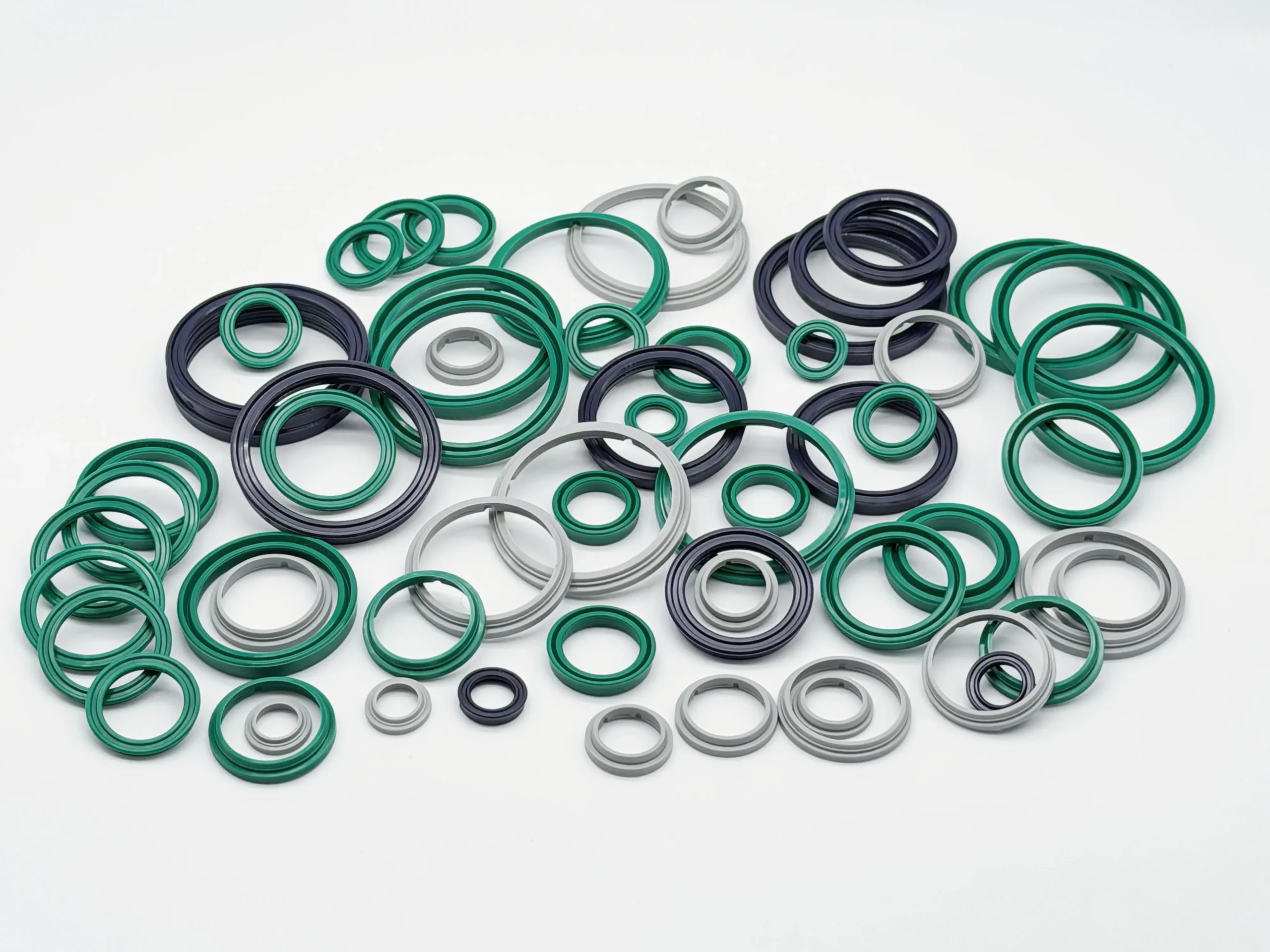
PEEK vs PTFE Seals:Wear Resistance, Friction, Temperature, and Chemical Compatibility
Two high-performance polymers. Different mechanical roles. Choose from the actual operating conditions—not from the material name alone.
Choosing between PEEK and PTFE seals can be challenging because both materials are widely used in demanding industrial applications. They offer good chemical resistance and high-temperature capability, but their mechanical behavior and performance under load are significantly different.
PTFE is well known for its low friction, excellent chemical resistance, and non-stick properties. PEEK, by contrast, offers high mechanical strength, stiffness, wear resistance, and dimensional stability under load.
So, which material is better for your application?
Choose PTFE when low friction and broad chemical compatibility are the primary requirements. Consider PEEK when mechanical strength, wear resistance, and resistance to deformation under load are more important. The final decision also depends on the seal design, operating conditions, material grade, and required service life.
In this guide, we compare PEEK vs PTFE seals across the properties that matter most to engineers and procurement teams, helping you identify the right material for your sealing application.
Which design problem comes first?
Select a dominant requirement to see the first material or design to evaluate. This is qualitative screening, not a material approval or a calculated performance score.
Start by evaluating virgin or engineered PTFE.
Low sliding resistance is the priority. Check wear, contact pressure, mating finish and the actual seal profile.
Read the friction and wear comparison →Verify the exact grade, chemistry, temperature, pressure, motion and seal geometry before specifying a material.
1. What Is the Difference Between PEEK and PTFE?
PEEK stands for polyether ether ketone, a high-performance engineering thermoplastic known for its mechanical strength, stiffness, and wear resistance.
PTFE stands for polytetrafluoroethylene, a fluoropolymer recognized for its very low friction, excellent chemical resistance, and wide operating temperature range.
Although both are used in industrial sealing, they solve different engineering problems.
PEEK is often selected for components that must retain their shape and withstand mechanical loads. PTFE is often preferred when sliding performance, chemical resistance, and low friction are critical.
The following table summarizes their main differences.
| Imóvel | PEEK | PTFE |
|---|---|---|
| Resistência mecânica | Alto | Lower than PEEK |
| Stiffness | Alto | Relatively low |
| Fricção | Generally higher than virgin PTFE | Muito baixo |
| Resistência ao desgaste | Generally excellent, depending on grade and conditions | Can be limited in demanding loaded applications when unfilled |
| Resistance to creep | Generally better under sustained mechanical load | More susceptible to cold flow |
| Resistência química | Excellent for many industrial media | Exceptional resistance to a broad range of chemicals |
| Capacidade de temperatura | High; depends on grade and load | High; depends on grade and load |
| Dimensional stability under load | Em geral excelente | Requires careful evaluation under sustained stress |
| Typical sealing roles | Backup rings, wear rings, valve seats, and selected precision sealing components | Dynamic sealing lips, spring-energized seals, valve seals, and chemical-resistant sealing components |
These are general material characteristics rather than guaranteed performance ratings. Filled grades, seal geometry, surface finish, pressure, speed, and temperature can significantly affect the results.
2. Mechanical Strength and Resistance to Deformation
Retain geometry under load
Strength and stiffness are useful for support, guiding and load-carrying roles.
Design around creep
Profile, filler, support and extrusion clearance work together to control deformation.
Mechanical strength is one of the most important differences between PEEK and PTFE.
PEEK: Better for demanding mechanical loads
PEEK has high strength and stiffness, making it suitable for components that must retain their shape under pressure, contact loads, or repeated mechanical stress.
In sealing systems, these properties can be valuable for:
- Backup rings used to reduce extrusion risk
- Wear rings and guide components
- Precision valve seats
- Components exposed to repeated loading
- Sealing elements that require dimensional stability
PEEK is particularly useful when the component must maintain a defined geometry during operation.
PTFE: Excellent sealing properties, but creep must be considered
PTFE is softer and more susceptible to creep, also known as cold flow, under sustained mechanical stress.
Over time, prolonged loading can cause deformation and dimensional changes. In a sealing assembly, this may affect contact pressure, clearances, or the ability of the component to maintain its intended shape.
This does not mean PTFE is unsuitable for high-pressure applications. Properly designed PTFE seals are widely used in demanding systems. However, the seal profile, supporting structure, extrusion clearance, pressure, and material formulation must be considered together.
Selection tip: If the primary concern is maintaining component geometry under sustained load, PEEK may be the stronger candidate. If the application prioritizes low-friction sealing and chemical resistance, PTFE remains a strong option.
3. Friction and Wear Resistance
Friction and wear directly affect seal service life, energy consumption, operating temperature, and maintenance requirements.
PTFE: A strong choice for low-friction applications
Virgin PTFE has an exceptionally low coefficient of friction and good self-lubricating characteristics.
These properties make PTFE attractive for applications involving sliding contact, especially when minimizing friction is important.
Typical considerations include:
- Reducing friction between moving components
- Supporting smooth reciprocating movement
- Limiting friction-related heat generation
- Minimizing resistance in selected rotary applications
- Operating in environments where conventional lubrication is restricted
PTFE is also available in modified and filled formulations designed to improve particular mechanical or tribological properties.
PEEK: Better suited to many wear-intensive applications
PEEK generally offers better mechanical wear resistance than virgin PTFE in demanding loaded applications.
It is often considered when a component must withstand repeated contact, resist deformation, or maintain dimensional stability during extended operation.
Filled PEEK grades can further improve selected properties, depending on the filler system.
For example, carbon fiber, graphite, or PTFE additives may be used to modify stiffness, wear behavior, or friction. The appropriate formulation depends on the operating environment and required performance.
Qual material dura mais tempo?
Neither material automatically delivers a longer service life in every application.
PTFE may perform very well when low friction and chemical resistance dominate the requirements. PEEK may provide an advantage when mechanical loading and wear are the primary challenges.
For dynamic seals, engineers should evaluate pressure, velocity, lubrication, mating-surface finish, contamination, and heat generation together.
Selection tip: Do not compare materials using friction alone. Evaluate the expected wear rate and dimensional stability under the actual operating conditions.
4. Chemical Compatibility: When PTFE Has the Advantage
Chemical compatibility is often a deciding factor in chemical processing, pharmaceutical equipment, analytical instruments, and industrial fluid-handling systems.
PTFE: Broad chemical resistance
PTFE is resistant to a wide range of acids, bases, solvents, and other industrial chemicals.
It is frequently considered for applications involving aggressive process media, chemical transfer, pumps, valves, and equipment that requires reliable isolation of fluids.
However, PTFE should not be described as universally compatible with every substance under every condition. Temperature, pressure, exposure duration, and unusual reactive environments still need to be evaluated.
PEEK: Excellent resistance to many industrial media
PEEK also offers excellent chemical resistance and performs well in many applications involving oils, hydrocarbons, water, steam, and selected solvents.
However, its chemical resistance is not identical to that of PTFE. Certain aggressive chemicals, particularly concentrated sulfuric acid and some strong oxidizing environments, can attack PEEK.
For this reason, PEEK should not be selected based on its mechanical advantages alone when handling aggressive chemicals.
How to evaluate chemical compatibility
Before selecting a sealing material, confirm:
- The exact chemical name and concentration.
- The minimum, normal, and maximum operating temperatures.
- Whether the seal is exposed continuously or intermittently.
- The operating pressure and mechanical stress.
- Whether cleaning agents or secondary fluids may contact the seal.
- Whether the selected grade or filled compound has relevant compatibility data.
Fillers also matter. A filled PTFE or filled PEEK compound may behave differently from the corresponding virgin polymer.
Selection tip: When chemical compatibility is the highest priority, start by evaluating PTFE. When mechanical loading is also substantial, compare the complete seal designs and material grades rather than making the decision from a general compatibility chart.
5. Temperature Resistance: Why the Highest Temperature Is Not Enough
Both PEEK and PTFE can be used in high-temperature industrial applications, but their performance under load must be considered carefully.
Common grades of both materials may have published continuous-use temperature limits around 260°C. This is only a broad reference point, not a universal rating for every seal.
The practical operating limit depends on the exact grade, mechanical stress, exposure time, thermal cycling, surrounding medium, and seal design.
PEEK under high-temperature mechanical loads
PEEK combines high-temperature capability with good mechanical strength and dimensional stability.
This combination makes it attractive for components that must retain their shape while exposed to elevated temperatures and mechanical loads.
PTFE at elevated temperatures
PTFE also offers a wide temperature operating range and excellent chemical resistance.
However, its susceptibility to creep under sustained loading remains an important design consideration, especially when temperature and pressure increase together.
A PTFE seal may still be the better solution when low friction and chemical resistance are more important than structural stiffness.
What should engineers check?
Before approving a high-temperature seal, review:
- Continuous operating temperature
- Picos de temperatura de curto prazo
- Pressure at the maximum temperature
- Thermal cycling and startup conditions
- Chemical exposure at elevated temperatures
- Dimensional stability and extrusion risk
Remember that a polymer’s melting point is not the same as its recommended continuous operating temperature.
6. Which Material Is Better for Dynamic and Static Sealing?
PTFE seals.
PEEK supports.
Use different material roles within one engineered assembly when the actual duty calls for both.
The sealing function is just as important as the material.
Dynamic seals
Dynamic seals operate against a moving surface. They may experience friction, wear, heat generation, and changes in contact pressure.
PTFE is often attractive for dynamic sealing because of its low friction. It is commonly used in properly designed spring-energized sealing systems and other applications where sliding performance is important.
PEEK may be appropriate for wear rings, guide components, backup rings, valve components, and selected specialized sealing designs exposed to higher mechanical loads.
For some applications, a combined design uses PTFE for the primary low-friction sealing element and PEEK for supporting or anti-extrusion components.
Vedações estáticas
Static seals do not experience continuous relative movement between the sealing surfaces, but they still need to resist pressure, temperature changes, and sustained compression.
PTFE can be suitable for chemically demanding static applications. However, creep and deformation must be considered where dimensional stability is critical.
PEEK may be useful in rigid sealing components, seats, or support structures where strength and resistance to deformation are important.
The correct choice depends on the required sealing mechanism, mating surfaces, and installation geometry.
7. PEEK vs PTFE Seals: Common Industrial Applications
The following examples illustrate how the two materials may be evaluated in different industries.
Processamento químico
PTFE is often considered for chemical pumps, valves, and fluid-handling systems that require broad chemical resistance.
PEEK may be appropriate for mechanical components, valve seats, and other parts exposed to substantial loading, provided the process medium is compatible with the selected grade.
Semiconductor and analytical equipment
Both materials may be used in specialized equipment, depending on the process medium, cleanliness requirements, temperature, and mechanical design.
PTFE can be attractive where chemical resistance and low friction are important. PEEK may be considered for rigid precision components and supporting elements.
For high-purity applications, verify the specific grade, extractables requirements, contamination controls, and relevant qualification data.
Equipamentos para petróleo e gás
PEEK and filled PEEK may be considered for selected high-load, wear-intensive, or dimensionally demanding components.
PTFE may be suitable where low friction and chemical resistance are priorities.
Actual suitability depends on pressure, temperature, fluid composition, gas exposure, extrusion clearance, and any applicable industry qualification requirements.
Bombas e válvulas
PTFE may be used for low-friction sealing elements and chemically resistant valve components.
PEEK may be used for valve seats, wear rings, backup rings, or other components where rigidity and resistance to deformation are valuable.
In some systems, combining different materials within one assembly can offer a better balance of sealing performance, friction, and mechanical support.
8. How to Choose Between PEEK and PTFE Seals
Use the following practical selection process before requesting a quotation.
Step 1: Identify the operating medium
List all chemicals, fluids, gases, lubricants, and cleaning agents that may contact the seal.
If chemical compatibility is critical, verify the exact material grade and compound.
Step 2: Define the mechanical load
Identify the operating pressure, differential pressure, movement, speed, and clearance between mating components.
If resistance to deformation and extrusion is a major concern, evaluate PEEK and other suitable support designs.
Step 3: Assess friction and wear
For sliding applications, determine whether low friction or wear resistance is the primary performance objective.
Consider whether virgin PTFE, filled PTFE, virgin PEEK, or filled PEEK should be evaluated.
Step 4: Confirm temperature requirements
Specify minimum and maximum temperatures, continuous exposure, short-term peaks, and thermal cycling.
Assess the material under the actual combination of temperature, pressure, and chemical exposure.
Step 5: Review the complete seal design
Material selection cannot compensate for an unsuitable seal profile, excessive clearance, poor surface finish, or incorrect installation.
Review the groove dimensions, mating surfaces, sealing mechanism, and installation conditions before final approval.
Step 6: Compare total operating cost
The lowest purchase price does not always provide the lowest total cost.
Consider service life, maintenance frequency, replacement costs, downtime, inspection requirements, and the consequences of leakage.
For critical applications, prototype testing or application-specific validation may be necessary before choosing a final design.
9. A Quick Decision Guide
Use this summary to identify which material deserves closer evaluation.
| Requisitos de candidatura | Material to evaluate first |
|---|---|
| Muito baixo atrito | PTFE virgem |
| Alta resistência química | PTFE |
| Alta resistência mecânica | PEEK |
| Resistance to sustained deformation | PEEK |
| Wear-intensive loaded components | PEEK or an appropriate filled grade |
| Chemical resistance combined with sliding performance | PTFE or a suitable PTFE-based compound |
| High-load support or anti-extrusion components | PEEK, depending on design |
| Combined low friction and mechanical support | A multi-material sealing assembly may be appropriate |
This guide is a starting point, not a substitute for application-specific engineering review.
Perguntas frequentes
Is PEEK better than PTFE for industrial seals?
Not in every application. PEEK generally provides higher mechanical strength, stiffness, and resistance to deformation. PTFE generally offers lower friction and broader chemical resistance. The better choice depends on the operating medium, pressure, temperature, movement, and sealing design.
Can PEEK replace PTFE seals?
Sometimes, but the materials are not automatically interchangeable. Replacing PTFE with PEEK can change friction, clearances, sealing behavior, and chemical compatibility. Any substitution should be reviewed against the original design requirements and validated where necessary.
Is PTFE suitable for high-pressure seals?
Yes, properly designed PTFE seals are used in high-pressure applications. Their suitability depends on the material formulation, seal geometry, pressure, temperature, extrusion clearance, and any supporting components.
Which material has better wear resistance?
PEEK generally offers better wear resistance than virgin PTFE in many loaded applications. However, modified and filled PTFE grades can improve wear performance, and the actual result depends on the operating conditions and mating surfaces.
Can PEEK and PTFE be used together in one sealing system?
Yes. In suitable designs, PTFE may provide the primary low-friction sealing function while PEEK serves as a backup ring, guide ring, or other supporting component. The configuration must be designed for the actual pressure, temperature, movement, and chemical environment.
Find the Right PEEK or PTFE Sealing Solution
Choosing between PEEK and PTFE requires more than comparing material properties. The most suitable solution depends on how the seal will operate, which chemicals it will encounter, and what performance requirements it must satisfy throughout its service life.
WALLE provides engineering plastic sealing components, including virgin PTFE seals, virgin PEEK seals, and polymer-filled PEEK products for a range of industrial applications.
Explore our product options:
- Válvulas de PTFE Virgin
- Válvulas de PEEK Virgin
- PEEK com carga polimérica
- Catálogo de produtos de selagem industrial
Need help selecting a material for your equipment?
Send us your application details, operating temperature, pressure, process medium, seal dimensions, and any existing drawings or samples.
Contact WALLE for a Custom Sealing Solution
Our team can review your requirements and help identify suitable material and design options for your application.
Não há respostas ainda