



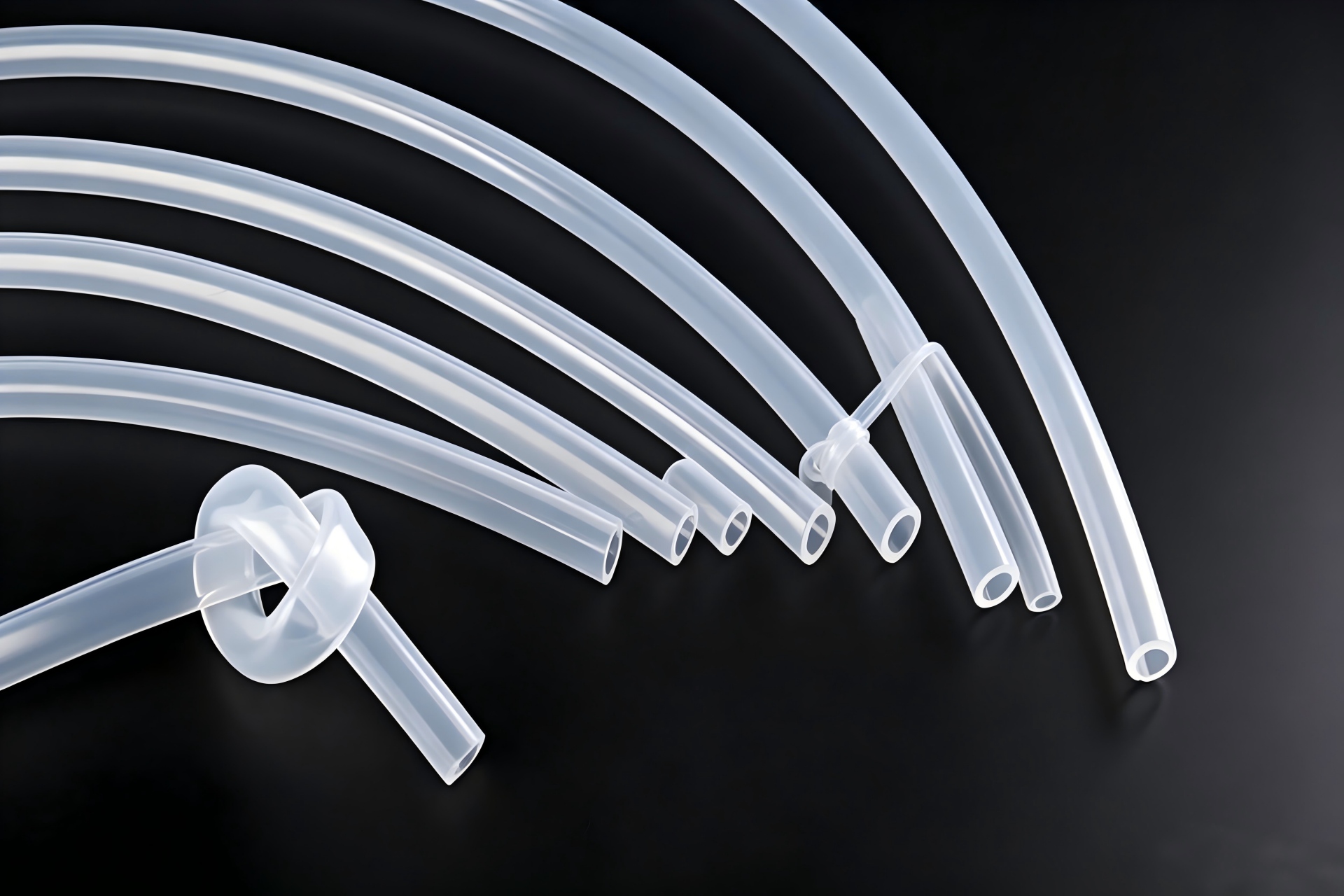
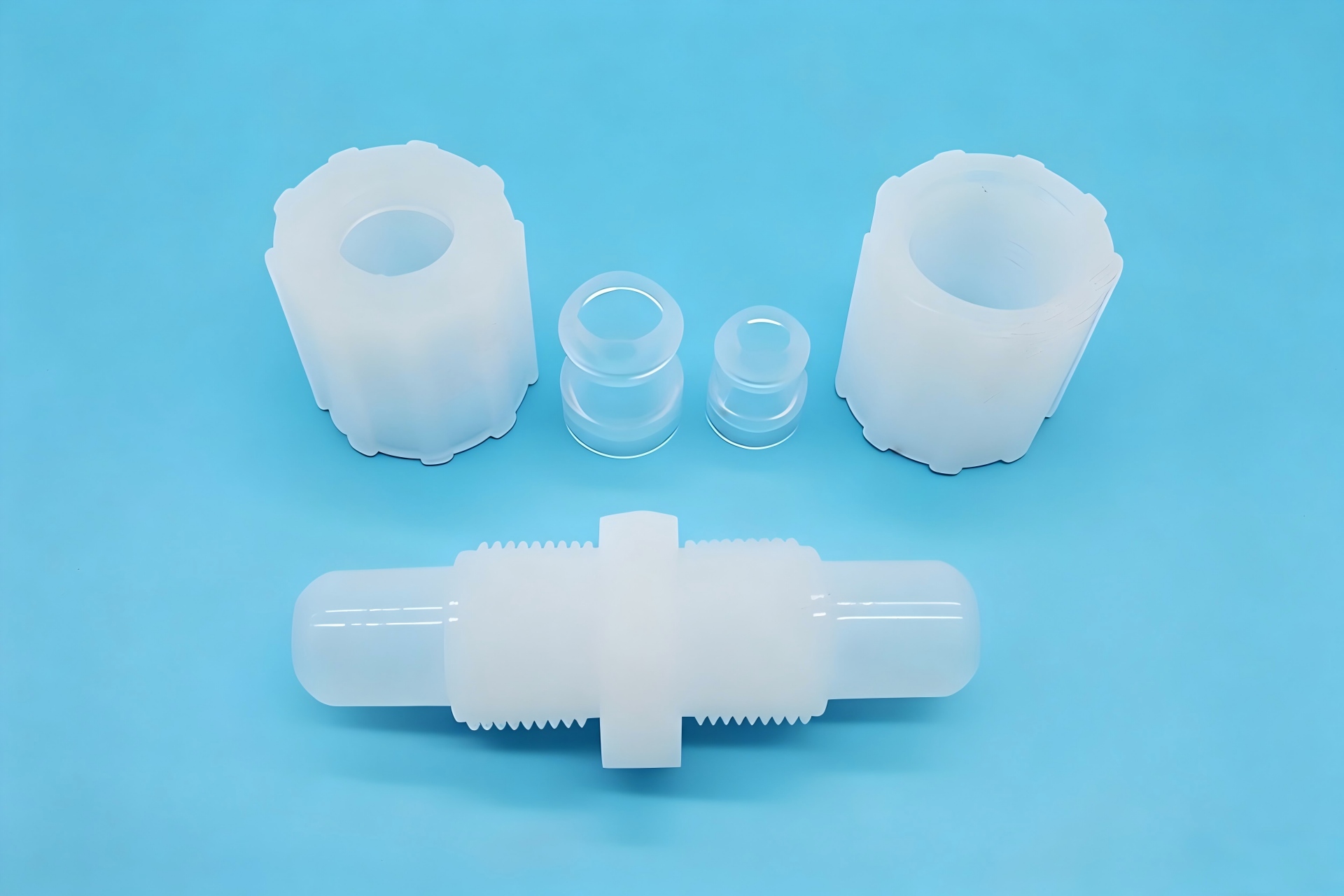
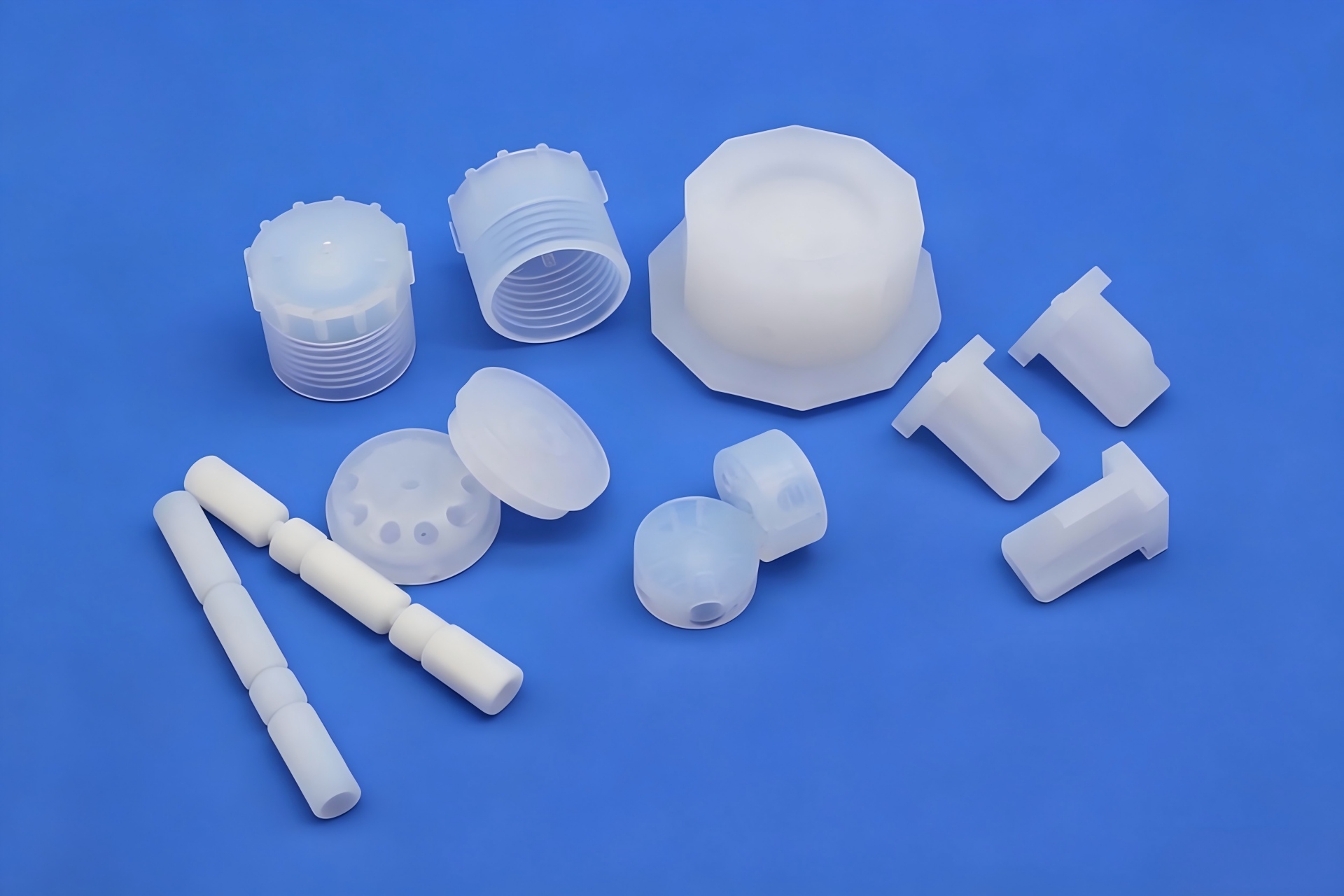
FEP has a crystalline melting point of 304°C and a density of 2.15 g/cm³. Although its tensile strength, wear resistance, and creep resistance are lower than many engineering plastics, its chemical inertness, wide temperature and frequency range, and low dielectric constant (2.1) make it an ideal choice for various applications. In addition, FEP exhibits excellent corrosion resistance, withstanding attack by most strong acids, strong alkalis, organic solvents, and oxidizing agents. Its surface is very smooth with an extremely low coefficient of friction, and it also features good non-stick properties and high/low temperature resistance (maintaining stable performance in the temperature range of -80°C to +200°C).
FEP is available in various forms: pelletized products for extrusion and molding, powders for fluidized bed and electrostatic coating, and aqueous dispersions. Semi-finished products include films, sheets, rods, and monofilaments. It has good processability and can be formed using common thermoplastic processing methods such as extrusion, injection molding, and compression molding.
Chemical Industry
FEP sealing parts perform exceptionally well in chemical transfer pipelines, pharmaceutical manufacturing, semiconductor production, laboratory equipment, medical devices, level gauges, and electrolytic solutions due to their outstanding corrosion resistance. They can withstand the attack of various chemical substances and are commonly used to make chemical containers (such as beakers, measuring cups, cleaning tanks, digestion vessels, hydrogen fluoride equipment, and anti-corrosion tanks) and pipelines.
Electronics Industry
FEP is also widely used in the electronics field. Thanks to its excellent electrical insulation and high-temperature resistance, it is commonly used as insulation layers for wires and cables, including aircraft hook-up wires, booster cables, alarm cables, flat cables, and oil well logging cables. In addition, FEP films are used in capacitor dielectrics, special cable insulation, wire insulation, electrical instrument insulation, and sealing gaskets.
Medical Industry
FEP materials are widely used in medical devices and pharmaceutical packaging due to their good biocompatibility and chemical resistance. FEP films, with high transparency, chemical resistance, and heat resistance, are commonly used as liners for food packaging and chemical containers.
Aerospace Industry
FEP sealing components play an important role in aerospace vehicles and missile products due to their excellent high-temperature and fire-resistant properties. They can withstand current transmission in high-temperature environments and provide good electrical insulation protection.
Other Fields
FEP is also used in thin coatings for solar collectors, non-stick coatings, optical fiber coatings, anti-corrosion coatings, and anti-fouling coatings. In addition, it can be used as a high-temperature adhesive, finding wide application in aerospace and electronics manufacturing.
With its excellent corrosion resistance, high-temperature resistance, electrical insulation, and good processability, FEP sealing parts have become indispensable materials in multiple fields.
Comments are closed